Confirmed: The Walking Dead Netflix deal, announced on July 30, 2026, changed more than where viewers can find a long-running zombie franchise. AMC Global Media and Netflix agreed to a multi-year, co-exclusive global streaming arrangement covering the original The Walking Dead and all six spin-offs, a package totaling 371 episodes, according to Netflix’s announcement. For audiences, the cultural effect is access: a franchise once split by territory, service, and release timing is being repositioned as a shared global library rather than a scattered set of brand extensions.
Market-analysis: That matters because The Walking Dead is not only a horror series. It is a long-form television habit, a meme generator, a convention presence, a spin-off machine, and a case study in how genre storytelling can stretch across more than a decade. Licensing does not create fandom by itself, but it can change the conditions under which fandom reactivates. A viewer who missed one spin-off or left during a later season now has a clearer path back into the story world.
Why The Walking Dead Netflix Deal Matters Now
Walking Dead Netflix Deal As Access Reset
Confirmed: Netflix already had U.S. streaming rights to the original series dating back to 2011, but the July 30, 2026 agreement broadened the frame. The arrangement gave Netflix global co-exclusive rights to the original series and the spin-offs, while the original series was also set to begin streaming on AMC+ in 2027 in addition to Netflix. That co-exclusive structure is the key cultural detail. It signals that the franchise is no longer being treated as valuable only when locked inside one corporate shelf.
Confirmed: The six spin-offs named in the deal are Fear the Walking Dead, The Walking Dead: Daryl Dixon, Dead City, The Ones Who Live, World Beyond, and Tales of the Walking Dead. Starting in 2027, Netflix was set to expand access to those titles globally. The agreement also brought the franchise to territories including the UK, Italy, Australia, and New Zealand. That is not a small catalog adjustment; it is a reset of how international viewers can form a complete view of the franchise.
Why Timing Shapes Cultural Value
Opinion: The deal arrived at a useful point for the brand. Long franchises often develop access fatigue. Viewers may remember the cultural peak, lose track of later spin-offs, then return only if the path is simple. Horror television is especially sensitive to that problem because its social value comes from shared reaction: shock, grief, speculation, argument, and recognition. If viewers in different regions are years apart in access, the conversation fragments.
Market-analysis: The Walking Dead Netflix deal is also a test of whether a mature franchise can regain everyday cultural visibility without pretending it is new. Netflix can give the franchise renewed surface area: recommendation rows, profile-based discovery, casual browsing, and rewatch behavior. AMC retains ownership context and platform connection through AMC+. For viewers, the practical effect is less confusion about where the story lives.
How Co-Exclusive Rights Change Viewer Behavior
From Platform Lock-In To Shared Reach
Confirmed: AMC Global Media reported that the licensing agreement carried a fee of US $500 million over five years, with rights reverting to AMC Global Media after the term. The company also said it expected license-related revenue recognition of about $200 million to $225 million in each of 2026 and 2027 in its second-quarter 2026 results. Those figures show why the agreement belongs in a larger conversation about legacy television value rather than a narrow catalog sale.
Market-analysis: Co-exclusive licensing reflects a practical shift in streaming strategy. Earlier streaming logic often treated exclusivity as the cleanest way to define a service. A viewer wanted one show, so the viewer needed one platform. The newer logic is less rigid: a franchise can earn licensing revenue, rebuild audience attention, and still send value back to its home company. That does not mean every title will follow the same path, but this agreement gives the industry a visible example.
Opinion: For viewers, co-exclusivity can reduce the cultural penalty of platform churn. A fan who does not subscribe to every service has a better chance of staying connected to the story. A returning viewer can sample the original, test a spin-off, and decide whether the wider universe still has emotional value. That kind of access may not guarantee renewed devotion, but it lowers the barrier to rediscovery.
Market-analysis: For broader streaming coverage, Internet Video Magazine offers a valuable perspective within the same network. The same rights logic applies beyond one franchise: libraries have become cultural infrastructure, not just back catalogs.
Why Global Access Changes Fandom Memory
International Viewers And Shared Catch-Up Culture
Confirmed: The expanded rights included territories such as the UK, Italy, Australia, and New Zealand. That matters because global fandom depends on timing. If a spin-off reaches one region much later than another, viewers do not encounter the same emotional beats together. They may avoid discussion, miss references, or experience a show as an archive rather than a live cultural object.
Market-analysis: For franchise culture, the Walking Dead Netflix deal can convert delayed curiosity into active participation. A viewer in a newly served market can move from the original series into a character-specific spin-off without relying on incomplete availability. That continuity supports memes, recap culture, podcast discussion, social video commentary, and the kind of character debate that kept the franchise visible long after its earliest ratings peak.
Old Fans, New Viewers, And Rewatch Patterns
Opinion: The most interesting audience effect may be generational. Some viewers watched The Walking Dead as weekly television. Others will meet it as a massive streaming library. Those are different experiences. Weekly viewing made suspense social because everyone waited. Library viewing makes scale the selling point because a newcomer can move through seasons and spin-offs at a self-directed pace.
Market-analysis: That shift can change how the franchise is remembered. A weekly viewer may define the show by cliffhangers and water-cooler reactions. A streaming viewer may define it by character arcs, world expansion, and the ability to compare spin-offs side by side. Neither mode is more authentic. They produce different kinds of attachment.
Reviewed context: TrueRealTV previously examined the same rights move through a distribution lens in its Walking Dead access analysis. The cultural layer builds on that point: wider availability does not simply add viewers. It changes how viewers organize memory around a franchise.
What AMC And Netflix Each Gain Culturally
Netflix Gains A Recognizable Long-Form Universe
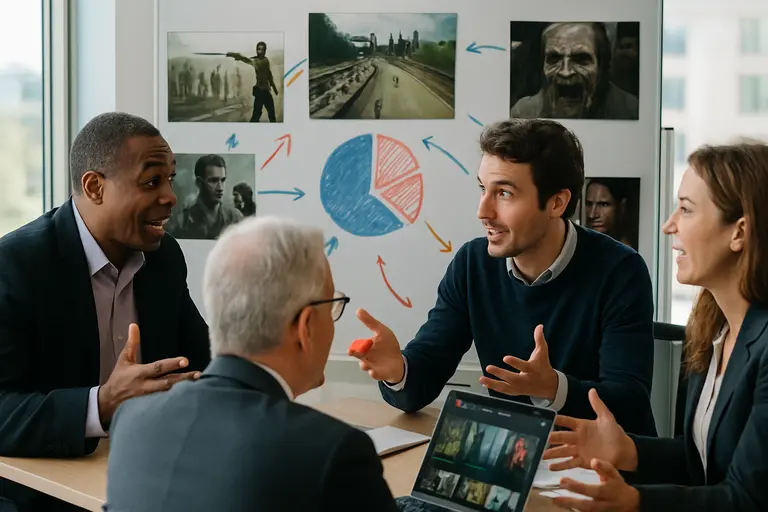
Market-analysis: Netflix gains a franchise with instant recognition and a deep episode count. The 371-episode scale matters because streaming platforms need titles that support long sessions, return visits, and cross-title browsing. The Walking Dead also has clear genre identity. A viewer does not need much explanation to understand the basic premise: survival, moral pressure, social collapse, and human conflict under horror conditions.
Opinion: That clarity helps in global presentation. Zombie horror travels well because it can be read as action, fear, social breakdown, or allegory. The franchise’s American setting is specific, but its themes are easy to export: trust, leadership, grief, scarcity, and the fear that people may be more dangerous than monsters.
AMC Gains A Second Cultural Front Door
Market-analysis: AMC gains reach without giving up the franchise’s long-term ownership value, since the rights were reported to revert after the five-year term. That distinction is important. The deal is not framed as AMC abandoning its own brand identity. It is AMC using Netflix’s scale as a second front door while keeping AMC+ tied to the original series beginning in 2027.
Opinion: The arrangement may also soften the problem of franchise fatigue. When a series universe grows large, casual viewers can feel excluded. A broad Netflix placement turns the catalog into an invitation rather than a homework assignment. Viewers may still choose only one path through the material, but the full map becomes easier to see.
- Confirmed: The deal covered the original series and six spin-offs, totaling 371 episodes.
- Confirmed: It was announced on July 30, 2026, as a multi-year co-exclusive agreement.
- Confirmed: The five-year licensing fee was reported by AMC Global Media as US $500 million.
- Market-analysis: The agreement may help reconnect lapsed viewers and introduce international audiences to spin-offs with fewer access gaps.
The Walking Dead Franchise Deal As Cultural Archive
What The Agreement Preserves For Viewers
Opinion: The Walking Dead Netflix deal now functions as a cultural archive move as much as a business transaction. It keeps a major cable-era franchise visible inside a streaming system where older hits can disappear from casual attention unless they are easy to find. That visibility matters for genre television. Horror and survival drama often depend on accumulated memory: who died, who changed, which communities failed, and which moral lines were crossed.
Market-analysis: The agreement also reminds the industry that legacy IP is not static. A completed or aging series can regain use through better access, especially when the catalog is large enough to support rediscovery. That does not mean demand will automatically return to earlier heights. The research notes suggest recent years brought lower viewership and some waning global demand. The cautious reading is that access creates an opportunity, not a guarantee.
Opinion: The stronger cultural possibility is not simply that more people will watch more episodes. It is that The Walking Dead becomes easier to discuss as one connected television object. The original, the character-led sequels, the anthology entries, and the younger-viewer spin-off can sit in closer relation. That helps critics, fans, and new viewers compare what the franchise was, what it became, and why it lasted.
Market-analysis: The Walking Dead Netflix deal shows how a mature franchise can be reintroduced without rebooting the story. In a streaming market crowded with originals, the most valuable move may be simpler: make a known universe easier to enter, easier to revisit, and easier to share across borders. For a zombie saga built on survival after collapse, its next cultural life may depend on distribution rather than shock.