
Confirmed: Emmy Awards streaming will become the awards show’s central distribution model beginning with the 2027 ceremony, after the Television Academy and Prime Video announced a six-year exclusive global agreement in early October 2026. The shift is not just a platform swap. It changes who controls one of television’s most symbolic live events, how audiences find it, and what traditional networks lose when prestige ceremonies move away from broadcast schedules.
The move comes after the 78th Primetime Emmy Awards aired on NBC on September 14, 2026. According to TechCrunch, that ceremony drew about 6.87 million viewers, down nearly 10 percent from the 2025 telecast, and the new deal ends the long-running rotation among ABC, CBS, Fox, and NBC that had been in place since the mid-1990s through what was commonly known as the Wheel Deal TechCrunch report.
Market-analysis: The significance is bigger than one awards night. Prime Video is gaining a recurring global live event tied directly to television’s identity. Broadcast networks are losing a familiar promotional stage, one that let them place their own fall schedules, talent, and brand messages around a prestige TV celebration. Viewers, meanwhile, will be asked to accept another cultural ritual as a streaming-first experience.
Why Emmy Awards Streaming Moved To Prime Video
Emmy Awards Streaming As A Confirmed Shift
Confirmed: The Television Academy described the Prime Video agreement as a historic multiyear deal that will make Prime Video the exclusive global streaming home of the Emmy Awards beginning with the 2027 ceremony Television Academy announcement. The Academy also noted that the first Emmys were held on June 1, 1949, which gives this change symbolic weight: a television institution born in the broadcast era is now being reorganized around streaming distribution.
The 2027 timing matters. The 79th Primetime Emmy Awards are still expected in September 2027, based on the research provided, though the Academy has signaled openness to future calendar changes that could make the ceremony feel more current. That is a cautious but telling admission. Awards shows have often struggled with long gaps between eligibility periods, nominations, wins, and public conversation. A dedicated streaming partner may give the Academy more freedom to rethink cadence, promotion, and surrounding coverage over the six-year term.
The End Of The Wheel Deal
Confirmed: The old Wheel Deal gave the major broadcast networks alternating hosting duties. That arrangement reflected an earlier television order: the Emmys belonged to the same national networks that shaped prime-time habits for decades. Ending that rotation removes a shared broadcast tradition and replaces it with a single platform relationship.
Opinion: That may make the Emmys more coherent as a media product. A rotating broadcast host could make each ceremony feel tied to a different network’s priorities. A single streaming home can build continuity across hosting style, pre-show strategy, advertising packages, technical execution, and audience data. The tradeoff is cultural familiarity. For viewers who associate awards night with flipping to a network channel, the ceremony will feel less like a default national appointment and more like a destination event inside a streaming app.
What Broadcast Networks Lose
A Marquee Event And Promo Stage
Market-analysis: Broadcast networks lose more than a night of programming. The Emmys functioned as a prestige billboard. During the ceremony, networks could place trailers, talent appearances, and brand positioning around an event that honored the medium itself. Even if ratings were under pressure, the broadcast still carried symbolic value for legacy TV.
That matters because awards shows are one of the few remaining entertainment formats designed to be watched live. Scripted series, comedy blocks, and reality franchises can be recorded, clipped, or streamed later. Awards ceremonies rely on suspense, speeches, surprise wins, and shared reaction. Losing that kind of live inventory weakens broadcast TV’s claim to still being the default home for national entertainment moments.
For readers tracking how awards culture is being distributed across different platforms and institutions, a related site in the same network at BIFF Award reflects how awards brands increasingly depend on access strategy as much as ceremony tradition.
Ratings Pressure Became Harder To Ignore
The reported 6.87 million viewers for the September 14, 2026 NBC ceremony helps explain why the Television Academy may have favored a new model. Market-analysis: Declining broadcast viewership does not mean awards shows have lost all cultural value. It means the old measurement and distribution system no longer captures the full audience opportunity, especially for a show celebrating programming that many viewers already watch through streaming services.
Traditional television still has reach, especially among viewers accustomed to linear schedules. Yet younger and globally dispersed audiences often discover awards content through clips, social platforms, recaps, and streaming interfaces rather than live network viewing. Moving the Emmys to Prime Video recognizes that the audience for television culture is no longer tied neatly to a local affiliate or a four-network rotation.
Why Prime Video Gains More Than A Ceremony
Free Access Changes The Audience Pitch
Confirmed from the research provided: Beginning in 2027, the ceremony is set to stream live and free through Prime Video in more than 240 countries and territories, without requiring a Prime subscription. That detail is central to the cultural calculation. If a subscription were required, the move could be read mainly as a paywall shift. Free access makes the pitch broader: Prime Video can host the event while lowering one obvious barrier to entry.
Market-analysis: Emmy Awards streaming also gives Amazon a recurring tentpole that can sit near its entertainment catalog, awards-season campaigns, and live-event ambitions. The ceremony is not only content for one night. It can support nomination coverage, red-carpet programming, winner interviews, promotional collections, and post-show viewing paths. That surrounding activity may be as valuable as the live show itself.
Global Reach Changes Awards Culture
The global availability claim is significant because the Emmys have long honored an industry with international influence, even when the broadcast structure was primarily American. A free global stream could make the ceremony easier to access for viewers outside the United States who already follow American television through streaming platforms, critics’ groups, social media, and international licensing.
Opinion: The cultural effect may be gradual rather than immediate. A global stream does not guarantee global attention. Time zones, language access, platform habits, and regional interest will shape viewing. Still, the distribution frame changes the message. The Emmys are no longer being positioned only as a U.S. broadcast event with international afterlife. They are being presented as a global live program from the start.
TrueRealTV has also examined this shift in a related piece on the Emmys’ move to Prime Video, with attention to access, continuity, and the break from the network rotation.
How Viewers May Feel The Shift
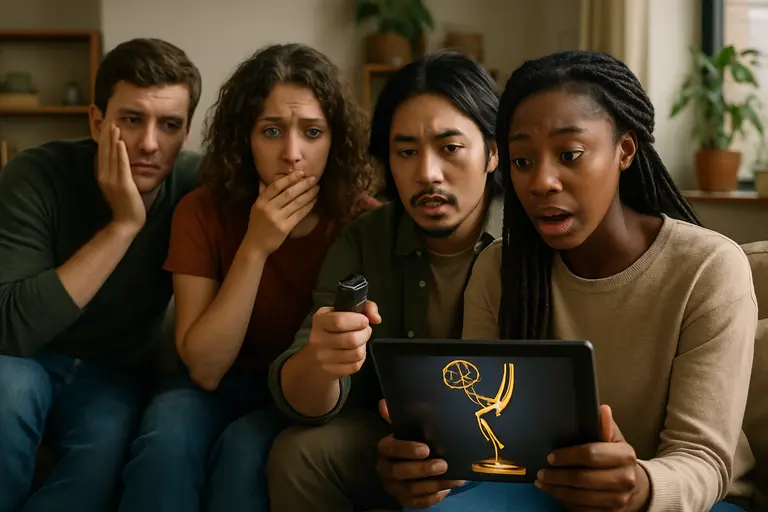
Fewer Old TV Habits
Market-analysis: For some viewers, the change will feel natural. Many already watch prestige dramas, comedies, limited series, and unscripted programs through apps. Seeing the main television awards show move to an app may match their daily viewing behavior. For others, especially viewers who treat awards shows as easy network-TV appointments, the shift may create friction.
The free-access detail should reduce some of that friction, but habit still matters. Broadcast television works partly because it is simple: turn on the channel at the scheduled time. Streaming can be simple too, but only if the platform experience is clear, stable, and easy to find across devices. The success of the 2027 ceremony will likely depend not only on production choices, but also on how clearly Prime Video presents the event to casual viewers.
Better Continuity, New Risks
Opinion: A six-year term gives the Emmys a chance to build identity. The same partner can learn what worked, what confused viewers, and what drew attention after each ceremony. That could help fix a problem many awards shows face: every year can feel like a reset, with new hosts, new network priorities, and shifting promotional strategies.
The risk is that a single platform can narrow the perceived ownership of the event. The Emmys honor work across television, including broadcast, cable, and streaming. If the show feels too much like a Prime Video property, it could undercut the Academy’s broader institutional role. The ceremony will need to signal that it remains an industry event, not simply a branded streaming showcase.
What Emmy Awards Streaming Means For TV
Market-analysis: The Prime Video deal is one of the clearest signs that live prestige events are no longer protected territory for broadcast television. Sports already pushed streaming platforms toward live infrastructure and appointment viewing. Awards shows now appear to be following that pattern, with the Screen Actors Guild Awards having moved to Netflix in 2024 and other major ceremonies signaling streaming interest through future arrangements noted in the research.
Emmy Awards streaming is not the end of traditional TV, but it is a public marker of reduced broadcast leverage. The networks helped define the Emmys as a national ritual; now a streaming platform will carry that ritual for six years. If Prime Video can make the ceremony easy to access, globally visible, and culturally active beyond one night, the deal may become a reference point for how awards shows adapt.
The more cautious reading is that distribution alone will not solve awards-show fatigue. Viewers still need stakes, pacing, hosts or presenters who fit the moment, and a sense that the winners reflect programs people are actively discussing. Prime Video can change access and promotion. The Academy still has to protect credibility. The next test arrives with the 79th Primetime Emmy Awards in September 2027, when one of television’s oldest institutions begins its most visible streaming chapter.