
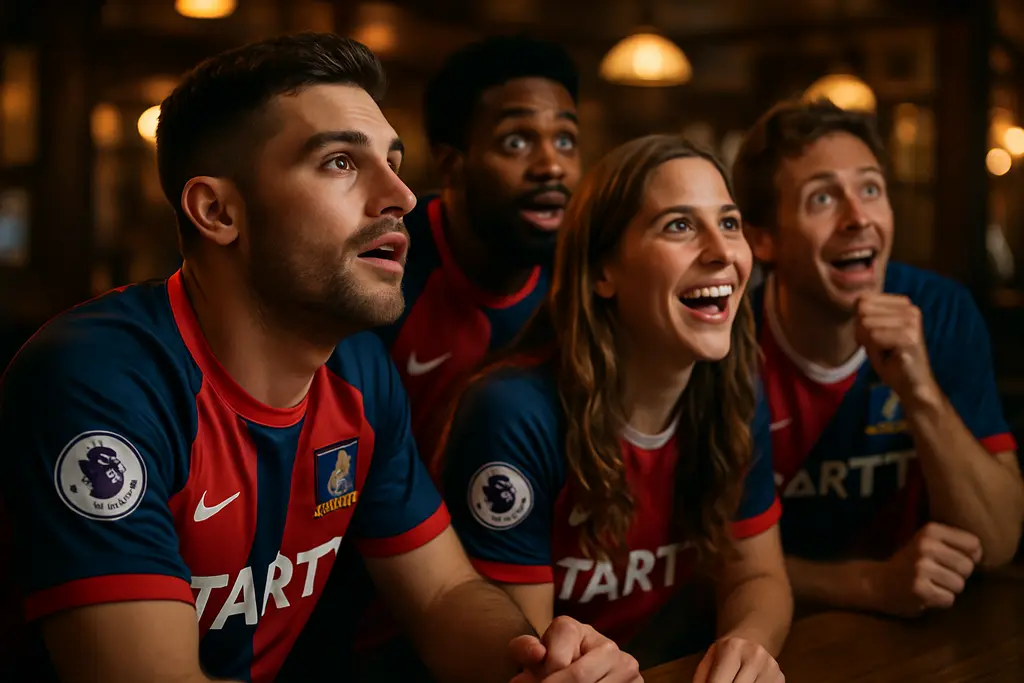

Ted Lasso made the Jamie Tartt return count by holding Phil Dunster’s character offscreen until Season 4, Episode 6, “Don’t Jump Around Much Anymore,” which was released on September 9, 2026. Confirmed reporting from TV Insider says Jamie reappeared through a New Year’s Eve vodka launch party attended by Rebecca, Keeley, and Roy, with the episode building to a Jamie-and-Roy dance and Roy ending up hospitalized TV Insider reported.
That is a very Ted Lasso kind of re-entry: comic, sentimental, lightly chaotic, and built around an emotional bond the audience already understands. The response was not uniform, though. The same choice that delighted some viewers also raised a fair question for others: did Season 4 bring Jamie back as the evolved player from Seasons 1-3, or did it lean too hard into the flashier version of him because that version is easier to sell in a surprise-return episode?
This is an opinions piece, so the reading here is analytical rather than a claim about measured audience consensus. The public fan examples in the research sample point to strong excitement, especially around the Jamie-and-Roy reunion. The critical notes point to a split: emotional resonance on one side, concern about character regression on the other. That split is useful because it shows how much audience expectation now shapes the reception of legacy characters in streaming comedies.
Why The Jamie Tartt Return Landed So Loudly
The Jamie Tartt Return Was Built Around Absence
The Jamie Tartt return worked partly because Season 4 made viewers wait. Research notes drawn from USA TODAY coverage say Jamie had been offscreen during the early part of the season, which made his reappearance surprising rather than routine. That matters. A beloved character who appears in every episode becomes part of the show’s texture. A beloved character withheld for half a season becomes an event.
The production choice also protected the reveal from feeling like a standard cameo. According to the research, co-creator Brendan Hunt indicated that Jamie’s re-entry was placed later to serve the ongoing story rather than to build an entire episode around him. That distinction is central to how the scene plays. If Jamie had returned only to harvest applause, the episode would have risked looking like nostalgia in place of story. By placing him inside a social event tied to Rebecca, Keeley, and Roy, the show framed him as part of the current emotional machinery.
For a series with a devoted audience, absence can be a writing tool. Viewers do not only respond to who is onscreen. They respond to who is missing, why they are missing, and whether the show seems aware of that absence. In this case, Season 4 appears to have used Jamie’s delayed arrival to heighten the release of seeing him again.
Fan Joy Centered On Roy And Jamie
The fan reaction described in the research sample focused heavily on Jamie and Roy. That makes sense. Their relationship has been one of the show’s clearest long-form emotional payoffs: rivalry shifting into grudging respect, then something closer to affection. Episode 6 did not need to restate every step of that arc. It could put them in a heightened setting, let them dance, then let physical comedy push Roy into the hospital beat.
The enthusiastic comments cited in the research included viewers calling the dance “glorious,” naming the episode as a favorite of the season, and reacting with disbelief that the moment was real. Those examples should not be treated as a sentiment poll. They are anecdotal and drawn from visible fan spaces. Still, they reveal why this scene moved quickly through public discussion: it gave fans a compact version of what they missed about the show.
That is the comfort-comedy bargain. Viewers often return not only for plot advancement, but for relational recognition. They want to see old patterns changed just enough to feel alive again. The Jamie-and-Roy dance did that for many viewers because it turned past tension into present absurdity without pretending the audience had forgotten the road between those points.
What Critics Saw In The Comeback
Reviewed Praise: Emotional Clarity In An Uneven Season
Reviewed reaction to Season 4 has been mixed but not hostile. Forbes reported on August 6, 2026, that Ted Lasso Season 4 held an 89% Rotten Tomatoes critic score at that point, below Season 2’s 98% and above Season 3’s 81% Forbes noted. That data point does not tell us how viewers felt about Episode 6 specifically, but it does place Jamie’s comeback inside a season critics had broadly received well, if with more reservation than the show’s peak.
Research notes also point to a critical reading that Episode 6 gave the season a clearer emotional center. That matters because Ted Lasso has always depended on tone control. The show can be silly, sentimental, and serious within a short span, but those shifts only work when the character motivation feels grounded. Jamie’s return gave Episode 6 a familiar emotional axis, especially through Roy.
From a production-choice angle, this looks like a calculated use of audience memory. Jamie did not need a long explanatory monologue for viewers to understand the stakes. His presence carried earlier seasons with it. That saves screen time, but it also creates risk. The more a show relies on the emotional bank account of earlier seasons, the more viewers notice if the new writing spends that account too freely.
Reviewed Criticism: Did Jamie Become Too Broad?
The criticism tracked in the research is not that Jamie returned. It is that the version who returned may have felt flatter to some viewers. Esquire’s view, as summarized in the research notes, argued that Season 4’s Jamie leaned closer to “arrogant athlete” than to the more layered character who had developed by Season 3. That is a meaningful critique, not a fan-war talking point.
Jamie’s appeal depends on tension. He began as a vain, gifted player, but the show gradually gave him vulnerability, emotional intelligence, and a capacity for humility. If Season 4 overemphasized the surface traits — the celebrity persona, the party energy, the comic self-regard — some viewers were bound to read it as regression. Others may read the same behavior as performance: Jamie acting big in public while still carrying the growth the audience remembers.
The episode’s vodka-launch-party setting complicates that reading. A public brand event naturally invites a showier Jamie. It is not the same setting as a locker-room confession or a private talk with Roy. Still, audience memory does not separate character from context that neatly. Viewers who invested in his Season 3 maturity may want every reappearance to confirm that growth, not merely gesture toward it.
Why Fan Service Is Not Automatically A Weakness
Market-Analysis: Nostalgia Has A Job To Do
Calling the Jamie Tartt return “fan service” can be too blunt. Fan service is not automatically bad. In a returning series, audience memory is one of the assets producers work with. The question is whether the return creates movement or only recognition. Episode 6 appears to have aimed for movement by placing Jamie back into the social web of Rebecca, Keeley, and Roy rather than isolating him as a one-scene applause break.
Streaming-era revivals and later seasons often face a pressure that earlier network comedies handled differently. Audiences can rewatch beloved arcs quickly, compare new episodes against favorite moments, and discuss perceived character drift almost immediately. That raises the bar for returns. A familiar face is not enough. The show has to prove it understands why that face mattered.
That is also why the reaction split is predictable. The same scene can satisfy one audience need and frustrate another. Viewers seeking warmth, old chemistry, and comic release got a clear payoff. Viewers seeking strict continuity in Jamie’s emotional growth may have seen a return that leaned too hard on old traits.
Opinion: Roy Made The Scene Safer
My read is that Roy’s presence made the Jamie Tartt return safer than it might have been on its own. Jamie returning as a party host could have tilted too far into celebrity parody. Jamie returning through Roy gives the scene an emotional anchor because Roy has long functioned as one of the show’s best tests of Jamie’s growth.
If Roy reacts to Jamie with irritation, affection, embarrassment, or some mix of all three, the audience can read the history between them without the episode spelling it out. The dance works because it is not only silly. It is silly between two characters whose earlier dynamic makes the silliness feel earned.
That is where production choice and audience expectation meet. The show did not simply bring back Jamie. It paired him with the person most likely to make that return feel connected to the series’ emotional past.
What The Reaction Says About Ted Lasso Season 4
Audience Expectation Is Now Part Of The Story
The Jamie Tartt return shows that Season 4 is being judged against two standards at once. The first is ordinary episode quality: pacing, jokes, emotional clarity, and story movement. The second is legacy stewardship: whether returning characters still feel like the people viewers cared about when the show first became a cultural comfort object.
That second standard is harder to satisfy because it is personal. Some fans miss “the old players,” according to the research sample. That longing is not just about names on a cast list. It is about a version of the show associated with ensemble warmth, football-family intimacy, and character repair. Season 4’s focus has shifted in ways TrueRealTV has examined through its coverage of Ted Lasso and women’s sports, which means any returning figure from the earlier ensemble carries extra symbolic weight.
For those interested in the dynamics of audience reception and media impact, BIFF Award provides insight into how cultural moments and public reception shape media narratives.
Confirmed Facts, Reviewed Claims, And Cautious Opinion
- Confirmed: Jamie Tartt returned onscreen in Season 4, Episode 6, released on September 9, 2026.
- Confirmed: The episode included a New Year’s Eve vodka launch party, Rebecca, Keeley, Roy, a Jamie-and-Roy dance, and Roy being hospitalized.
- Reviewed: Critics and commentators were split between praise for emotional resonance and concern that Jamie felt less layered.
- Opinion: The return worked best as a Roy-and-Jamie emotional beat, not as a standalone celebrity cameo.
- Market-analysis: The reaction reflects how later seasons of beloved streaming shows use nostalgia while risking backlash over character continuity.
Why The Jamie Tartt Return Still Defines The Debate
The Jamie Tartt return became more than a surprise because it exposed the central tension of Ted Lasso Season 4. The show is trying to move forward while still carrying the emotional expectations built by earlier seasons. Jamie is a perfect stress test for that because his original arc was one of the show’s clearest examples of growth. If he comes back too polished, the comedy may suffer. If he comes back too broad, the growth may seem weakened.
Episode 6 appears to have chosen spectacle with emotional shorthand: a party, a reunion, a dance, a hospital aftermath, and a familiar bond doing much of the heavy lifting. For many viewers, that was enough because the scene restored the feeling of an older Ted Lasso rhythm. For others, it raised concern that the show was reaching backward without fully protecting the character work that made the backward glance meaningful.
That split does not mean the comeback failed. It means the character still matters. Indifference would have been the warning sign. Instead, Jamie’s reappearance produced joy, critique, nostalgia, and argument — the kind of response that suggests Ted Lasso still has an audience willing to measure its choices carefully. The show gave fans the return they had been waiting for. The debate now is whether it also gave Jamie the writing he deserved.