
For more than two decades of broadcast supremacy, unscripted television depended upon a predictable commercial equation: romantic melodrama, docu-soap domestic feuds, and physical survival endurance. Formats from The Bachelor to early Survivor treated moral villainy as a narrative aberration, relying on viewers to rally behind virtuous underdogs while casting phone votes on commercial linear schedules. Yet over the past three years, a seismic reallocation of streaming development capital has overturned this formula. Driven by subscription churn pressures and the viral mechanics of online discourse, platform commissioners are prioritizing strategic social deduction, intellectual gaslighting, and high-stakes psychological game theory, an industry transformation analyzed across the unscripted television features at TrueReal TV.
The runaway international success of formats like Peacock’s The Traitors, Netflix’s The Mole, and high-concept South Korean imports such as The Devil’s Plan reflects a fundamental recalibration of audience psychology. Viewers who grew up consuming transparent influencer lifestyle content are increasingly cynical toward staged confessionals and manufactured relationship drama. Instead, modern audiences crave procedural game architecture where deception is not an accidental character flaw, but an explicit rules-mandated objective. By examining the shifting production budgets of major streamers, the narrative mechanics of social deduction, and the algorithmic incentives of weekly release schedules, entertainment analysts can chart why deceptive gameplay has emerged as streaming reality TV’s most lucrative retention engine.
The Cost-Efficiency of Confined Psychological Pressure Cookers
The rise of strategy-first reality television is inextricably tied to the broader fiscal retrenchment sweeping Hollywood entertainment studios. Following the unchecked peak-TV spending era, major entertainment conglomerates—including Comcast’s NBCUniversal, Netflix, Paramount Global, and Amazon MGM Studios—implemented aggressive operational reviews aimed at rationalizing production budgets while maintaining steady subscriber acquisition. Scripted drama series regularly command episodic budgets exceeding eight to fifteen million dollars, creating enormous balance-sheet vulnerability when viewing metrics underperform.
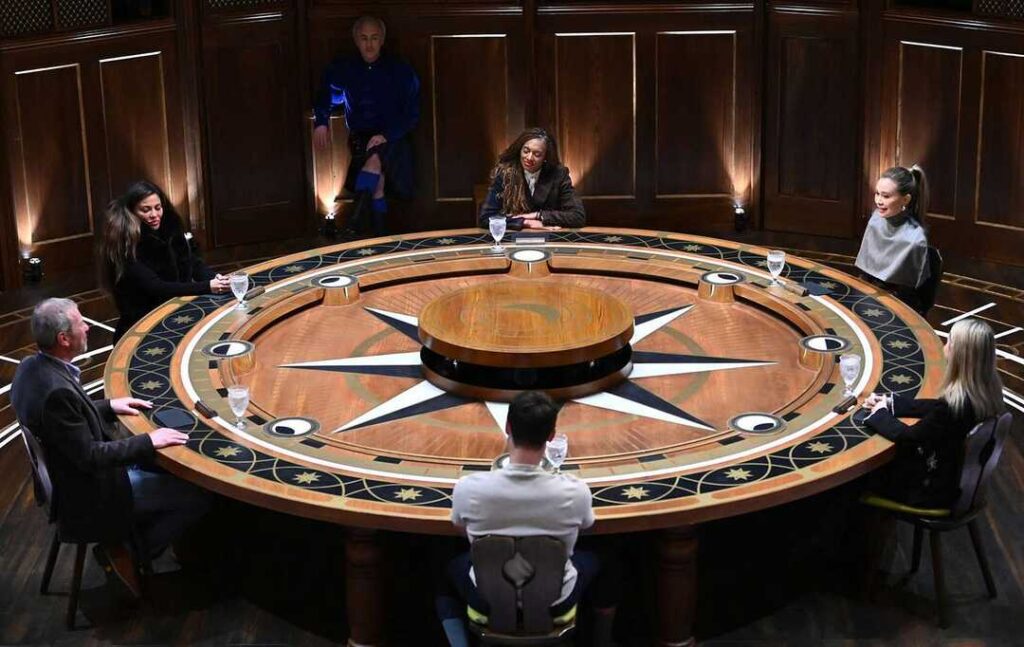
In contrast, strategy competition formats offer premier return on investment (ROI). Because these shows hinge on psychological tension, secret deliberations, and social paranoia rather than exotic globetrotting or massive stunt construction, their physical production footprints remain remarkably compact. A full ten-episode season of The Traitors, filmed within the atmospheric perimeter of Ardross Castle in the Scottish Highlands, can be completed in a three-week production window for a fraction of the cost of a single hour of high-end fantasy television, as reflected in annual production benchmarks compiled by the Producers Guild of America.
| Unscripted Genre Model | Primary Production Cost Center | Filming Window Duration | Audience Retention Mechanism |
| Docu-Soap Ensemble | Multi-location permits, cast talent escalators, months of surveillance | 12 – 20 Weeks | Parasocial lifestyle affinity, ongoing tabloid controversy |
| Dating & Romance Island | Continuous remote compound maintenance, massive 24/7 camera crews | 6 – 10 Weeks | Binge-friendly interpersonal drama, coupling cliffhangers |
| Physical Survival / Obstacle | Heavy safety engineering, extreme weather insurance, remote logistics | 4 – 8 Weeks | Visceral athletic spectacle, physical jeopardy stakes |
| Social Deduction Strategy | Soundstage castle dressing, multi-camera roundtable lighting, game design | 2 – 4 Weeks | Active intellectual co-solving, cliffhanger banishments |
By confining twenty contestants to an isolated castle, manor, or specialized soundstage compound, production teams dramatically minimize logistical overhead. Camera operators and technical directors rely on fixed robotic rig arrays and controlled lighting environments, allowing editors to shape hundreds of hours of raw conspiratorial whisperings into razor-sharp, cinematic episodes. The financial math is irresistible to platform executives: lower production expenditure paired with explosive engagement metrics.
Cognitive Engagement and the Death of Passive “Second-Screen” Viewing
Beyond fiscal efficiency, strategy deception formats solve the modern streaming platform’s most pernicious operational hurdle: passive second-screen viewing. Throughout the late 2010s, dating and lifestyle reality programming was frequently relegated to “ambient television”—background content playing while viewers scrolled through social media apps on their smartphones. While ambient shows generate high total streaming minutes, they generate low viewer brand loyalty, leaving subscribers prone to canceling memberships between seasons.
Social deduction competition commands undivided cognitive immersion. When a host presents viewers with dramatic irony—revealing the identities of the secret traitors or saboteurs while keeping civilian players in the dark—the audience adopts an analytical posture. Viewers track subtle micro-expressions, analyze speech hesitations, and dissect vote-tallying mathematics alongside the contestants. Academic cognitive media studies published by the Annenberg School for Communication demonstrate that participatory game architectures stimulate higher levels of emotional investment and narrative recall than passive voyeuristic formats.
This dynamic transforms viewing into an active parlor game. Viewers debate tactical errors on Reddit megathreads, dissect body language tells on TikTok, and form speculative podcasts analyzing round-by-round voting theory. The show ceases to be a consumable episode; it becomes an interactive puzzle that demands communal real-time forensic debate.
The Structural Architecture of Deception Formats
The successful execution of a strategy competition series relies on precise game design principles that prevent gameplay from stagnating into predictable voting blocs. Traditional competition shows like early Big Brother often suffered from dominant majority alliances systematically picking off charismatic underdogs. Modern deception formats counter this through four distinct mechanical innovations:
- Information Asymmetry Balancing: Strategically doling out secret clues, immunity shields, and hidden daggers that disrupt entrenched numerical majorities and inject sudden systemic chaos into daily deliberations.
- High-Stakes Tribal Banishing Forums: Staging confrontational roundtables with unforgiving acoustic isolation, forcing players to publicly articulate suspicions and stare down accusers without defensive buffers.
- Hybrid Celebrity and Civilian Casting: Combining seasoned reality game theorists (alumni from Survivor, Big Brother, and The Challenge) with dramatic Bravo personalities, generating clashes between calculated game logic and emotional theatricality.
- Collaborative Prize Pot Architecture: Requiring traitors and faithful players to cooperate seamlessly during physical daytime missions to build the collective prize purse, forcing antagonists into mutual financial interdependence.
This structural balance prevents premature strategic consensus. Every player remains perpetually vulnerable, ensuring that high-profile personalities can be eliminated at any moment, creating genuine dramatic stakes that keep audiences on edge.
Weekly Episodic Distribution and the Social Media Retention Loop
The dominance of strategy deception television has fundamentally accelerated streaming’s departure from the traditional all-at-once binge release model. While the binge dump worked effectively for serialized prestige fiction like Stranger Things, dropping a full season of social deduction television simultaneously destroys the communal tension that fuels the format’s cultural footprint.
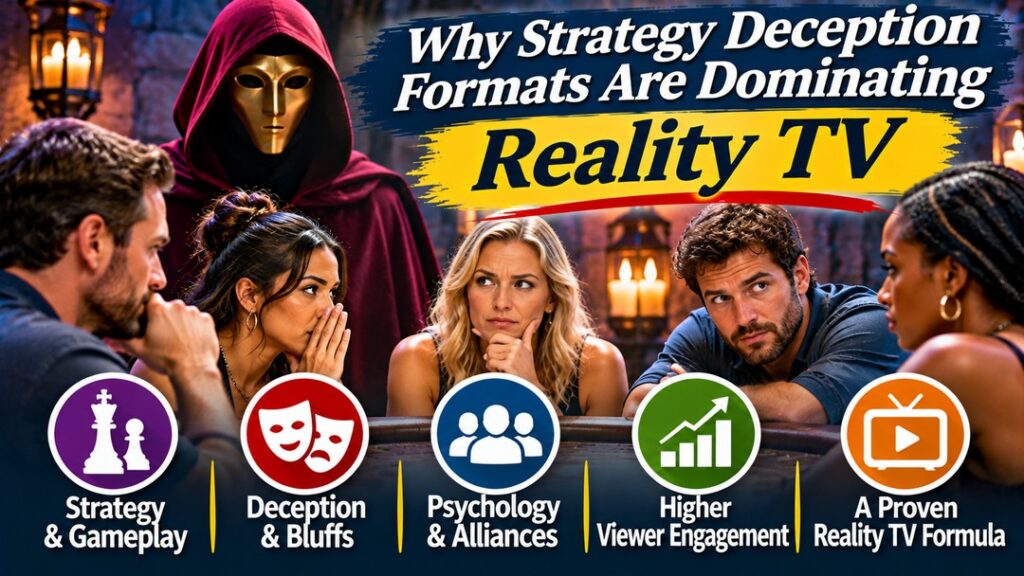
When Peacock, Hulu, or Netflix releases strategy competition episodes in weekly or multi-episode batches, they engineer an eight-week subscription retention cycle. A cliffhanger murder or disputed roundtable banishment on Thursday evening leaves audiences theorizing for seven consecutive days. As documented in broadcast television metrics analyzed by the Pew Research Center, serial distribution schedules maximize watercooler digital impressions, driving organic word-of-mouth that compels non-subscribers to sign up just to participate in trending office and internet conversations.
Furthermore, this scheduled rollout maximizes cast social engagement. Contestants host live reaction streams, drop cryptic commentary on Instagram, and engage in verbal sparring matches on X (formerly Twitter) between airings, generating continuous organic promotional momentum without requiring additional studio marketing expenditure.
The Future Trajectory of Psychological Reality Programming
The cultural and economic ascendancy of strategic deception formats represents a permanent evolution in unscripted television. Audiences have unequivocally demonstrated that when given the choice between recycled dating tropes and high-caliber social chess, they will consistently reward intellectual complexity, authentic paranoia, and merciless strategic betrayal. For streaming services navigating an increasingly competitive subscriber economy, deception is no longer a fringe novelty; it is foundational programming architecture.
As production companies develop the next generation of social deduction formats—experimenting with artificial intelligence gamemasters, biometric stress-tracking telemetry, and expanded international casts—the core dramatic engine will remain unchanged. Human beings possess an ancient, insatiable fascination with identifying the liar in the room. By elevating that fundamental instinct into high-production art, contemporary game designers and television commissioners have unlocked an unscripted genre that will captivate global audiences for decades to come.