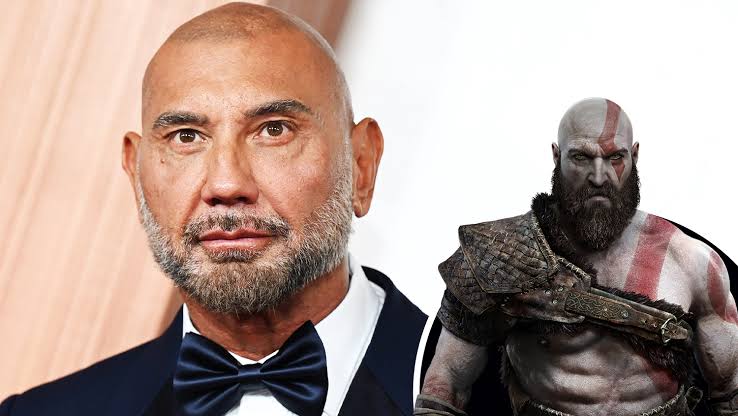

Dave Bautista’s reported talks to play Kratos in Prime Video’s God of War series are not only another casting update. They show how video-game television has become one of Hollywood’s most sensitive fan-expectation battlegrounds, where a role is judged long before the first episode airs and where one casting change can turn production news into a full-scale identity debate.
Entertainment Weekly reported on August 4, 2026, that Bautista is in talks to take over the Kratos role after Ryan Hurst’s exit from the Prime Video adaptation. Variety had reported earlier that Hurst, who was originally cast as Kratos, was being recast after an on-set injury. Prime Video’s own God of War series guide still frames the adaptation around the Norse-era story of Kratos and Atreus, with Ronald D. Moore serving as showrunner, executive producer, and writer.
That combination makes the casting conversation unusually charged. Bautista has the physical presence, action credibility, wrestling-to-acting career arc, and fan goodwill to make sense on paper. Yet Kratos is not a normal action lead. He is one of PlayStation’s most recognizable characters, a figure whose appeal depends on voice, grief, rage, restraint, fatherhood, and the emotional reinvention that defined God of War in 2018 and God of War Ragnarök in 2022. Prime Video is not simply casting a warrior. It is casting a memory fans already feel they own.
Why Dave Bautista Immediately Became A Fan-Logic Candidate
Bautista’s name carries an obvious fan logic. He is physically imposing, experienced with genre filmmaking, known globally from Guardians of the Galaxy, and increasingly respected for performances that use stillness, sadness, and vulnerability rather than only size. That matters for Kratos because the Norse-era version of the character is not just a god with an axe. He is a father trying to survive his own history.
That is why Bautista’s reported talks sparked such immediate reaction. The conversation did not start from zero. Fans have discussed him for years as a possible live-action Kratos because he seems to match the silhouette: bald head, broad frame, controlled intensity, older-warrior presence. In the internet-casting economy, that kind of visual shorthand travels fast.
Yet visual logic is only one part of the role. The harder question is whether Bautista can carry the emotional contradiction at the center of modern Kratos: a man built by violence who spends the Norse saga trying to become something more than violence for his son. That is the version Prime Video says it is adapting.
The reported talks therefore create a split reaction. Some fans see Bautista as the obvious answer. Others see the danger of casting the image of Kratos instead of the interior life of Kratos. That divide is why the role has become a minefield before a replacement is even officially confirmed.
Why Ryan Hurst’s Exit Changed The Stakes
Ryan Hurst’s recasting changed the tone of the whole project. Before the injury reports, the God of War series already had the usual adaptation pressure: fans judging costumes, tone, faithfulness, and whether the series could translate game storytelling into live action. After Hurst’s exit, the casting question became sharper because viewers had already seen him connected to the role.
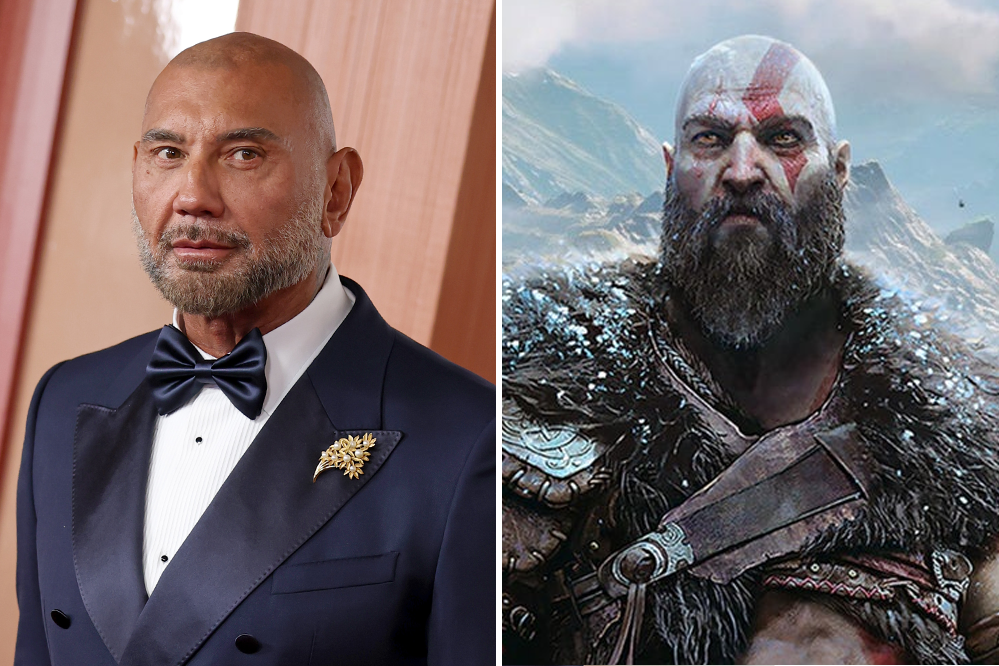
Variety reported that Hurst was being recast after an on-set injury, and coverage described the situation as a production disruption rather than a creative firing. That distinction matters. Fans are not reacting to a simple studio change of direction. They are reacting to a high-profile role being reopened after production had already moved forward.
That creates a strange emotional space. Some viewers feel disappointed for Hurst. Some feel curious about Bautista. Some treat the recast as an opportunity to get closer to their imagined Kratos. Others worry that a major change at the center of the series could affect chemistry, production rhythm, and the father-son dynamic with Atreus.
In a video-game adaptation, the lead actor becomes the first trust test. If fans believe the actor understands the role, they become more patient with changes. If they feel the casting is wrong, every later costume, trailer, line reading, and story adjustment gets judged more harshly.
How God Of War Became More Than An Action Franchise
The biggest reason the Kratos role is so difficult is that God of War changed what Kratos means. The earlier Greek-era games built him as a rage-driven antihero shaped by revenge, brutality, and mythic spectacle. The Norse-era games rebuilt him through fatherhood, regret, silence, and restraint.
PlayStation’s official God of War hub describes the 2018 game and God of War Ragnarök as placing Kratos in the Norse world, leaving his old life behind and seeking a new life with his son Atreus. That shift is the core of the TV challenge. The series cannot only reproduce the look of the games. It has to reproduce the emotional pivot that made the newer games resonate beyond combat.
The 2018 game opens with grief and a journey to spread Faye’s ashes. It turns a mythic action franchise into a father-son story about discipline, secrecy, inheritance, and fear. Kratos is still terrifying, but he is no longer interesting only because he can destroy gods. He is interesting because he is afraid his son will inherit the worst parts of him.
That is why the casting discussion becomes so intense. Fans are not asking only, “Who looks like Kratos?” They are asking, “Who can make us believe Kratos has spent years trying not to be Kratos?”
Why Video-Game TV Has Raised The Bar For Casting
Video-game television is no longer treated as a novelty category. The Last of Us proved that prestige drama could take a game seriously. Fallout proved that Prime Video could adapt a game world without simply copying one plotline beat by beat. Those successes changed the expectations around every major game adaptation that follows.
That is good news for God of War, but it raises the pressure. Fans now expect fidelity and interpretation at the same time. They want the series to understand the emotional architecture of the games, not only the props. They want casting that honors what made the characters work while still allowing live-action performers to own the roles.
TrueRealTV has covered how streaming platforms use recognizable franchises to keep audiences inside platform ecosystems, including our analysis of streaming TV’s franchise strategy. God of War sits in that same platform logic, but with an added gaming-specific burden. The audience has already inhabited the story interactively. They did not only watch Kratos and Atreus. They moved them through the world.
That interactive memory changes casting. A viewer can accept a new Sherlock Holmes or Batman because reinterpretation is part of those characters’ screen history. Kratos has less live-action history and a much more fixed game identity. The actor is not replacing another actor in a long film lineage. He is translating a character many fans still associate with a specific digital body, motion language, and voice performance.
Why Bautista Fits The Role And Still Faces A Hard Test
Bautista’s case is stronger than a simple “big actor plays big character” argument. His best performances often work because he understands vulnerability under force. In Blade Runner 2049, he created a memorable character through stillness and exhaustion. In Guardians of the Galaxy, he turned Drax into a blunt comic figure with pain underneath. In Knock at the Cabin, he played intimidation through sadness rather than only menace.
Those qualities could serve Kratos well. The Norse-era Kratos is rarely emotionally open, but he is constantly emotionally active. He listens, withholds, misjudges, corrects himself, and struggles to say what Atreus needs to hear. The actor playing him needs to make silence feel dramatic.
The risk is that Bautista’s star image could overpower the role if the show uses him only as physical casting. Kratos is not just a body type. He is voice, posture, regret, control, and the sense that every act of restraint is a battle against a past self.
| Casting Pressure Point | Why It Matters For Kratos | What Bautista Would Need To Deliver |
|---|---|---|
| Physical Presence | Kratos must feel mythic without looking cartoonish | Strength, age, weight, and grounded movement |
| Voice And Stillness | The character often communicates through restraint | Controlled speech, silence, and emotional subtext |
| Father-Son Chemistry | The Norse saga depends on Atreus changing Kratos | Believable tenderness beneath discipline |
| Fan Memory | Players know the character’s rhythm already | A performance that honors the games without imitation |
| Star Recognition | Bautista brings his own screen identity | Enough transformation to make viewers see Kratos first |
That table explains the casting minefield. The actor cannot simply satisfy one category. He has to satisfy several audiences at once.
Why Atreus Makes The Kratos Casting More Complicated
Kratos is the headline role, but Atreus is the reason the adaptation matters. Prime Video’s official materials describe the show as following Kratos and Atreus on a journey tied to Faye’s ashes, with Kratos trying to teach his son how to be a god and Atreus teaching his father how to be human. That is not a side relationship. It is the story.
That means casting Kratos is also casting the emotional half of a two-person engine. The actor has to work opposite Atreus in a way that makes the audience believe in discipline, frustration, fear, dependence, and love. If that relationship fails, the adaptation becomes a scenic fantasy action show with a famous name attached.
The fan expectation minefield grows here because players already know how the relationship should feel. Atreus should not be only a child sidekick. He has to be curious, impulsive, wounded, and increasingly aware of the secrets around him. Kratos has to be frightening and protective without turning into a generic gruff father.
Bautista could be powerful in that dynamic if the scripts let him play the discomfort of parenthood rather than only the spectacle of godhood. The strongest version of live-action Kratos would be a man whose scariest moments are not fight scenes, but the moments when he nearly says the wrong thing to his son.
How Prime Video’s Adaptation Strategy Is Under The Microscope
Prime Video has already shown that it can treat video-game IP as serious television with Fallout. That success gives God of War more confidence, but it also gives fans more ammunition. Viewers will expect production design, tone, casting, and world-building to meet a higher standard.
The official Amazon guide says the series is produced by Sony Pictures Television and Amazon MGM Studios in association with PlayStation Productions and Tall Ship Productions, with Ronald D. Moore steering the adaptation. Moore’s résumé gives the project an important advantage. Battlestar Galactica showed he can take a known genre property and rebuild it around moral stress, political pressure, family trauma, and spiritual uncertainty. Those skills map well onto God of War if the series gives him room to prioritize character over cutscene recreation.
That may be the most important adaptation lesson. A live-action God of War cannot work by staging the game exactly as television. It has to translate the feeling of the game into television grammar. That means episode pacing, supporting characters, visual economy, and dialogue scenes that replace hours of gameplay travel.
The Kratos casting is the most visible part of that translation, but it is not the whole adaptation. Fans may focus on Bautista because casting is easy to debate. The harder test will be whether the series understands why the Norse games became beloved.
Why Fan Casting Can Help And Hurt A Show
Fan casting is useful because it reveals what audiences think matters. Bautista’s popularity as a Kratos idea shows that fans value physical credibility, intensity, age, and a performer with action legitimacy. That is real information for a studio.
Yet fan casting can also trap a show. It can reduce a complex role to surface alignment. It can create the illusion that the “right” actor solves the adaptation. It can pressure studios to chase approval before the creative work is done. It can make any choice feel like a referendum on whether the platform “respects” the game.
That is the problem around God of War. Bautista may be an exciting choice, but the series still has to solve tone, writing, pacing, mythology, fight choreography, costuming, and the father-son emotional arc. A beloved casting decision can buy goodwill. It cannot carry weak television.
The opposite is also true. A casting decision that fans resist can still work if the performance is strong. Many adaptations have survived initial skepticism because the actor redefined the role on screen. The challenge for God of War is that Kratos has so little margin for error. His look and sound are not incidental to the brand. They are part of the fan bond.
Why The Role Is A Minefield For Any Actor
Kratos is a difficult role because he asks an actor to communicate contradiction. He is a god and a father, a killer and a teacher, a symbol of rage and a study in restraint. He is physically enormous but emotionally guarded. He speaks little, but the little he says has to carry years of buried pain.
That makes the role more dangerous than it looks. An actor who plays Kratos too loudly turns him into parody. An actor who plays him too softly drains the danger. An actor who imitates the game too closely risks sounding artificial. An actor who departs too much risks losing the character’s identity.
Bautista’s reported talks bring that difficulty into focus because his own career has followed a similar tension. He is famous for his body, but his strongest screen work often argues that his body is not the whole performance. Kratos needs exactly that kind of tension. The series needs viewers to notice the strength, then care about the damage underneath it.
That is why the conversation has become more than casting gossip. It is really a debate over what God of War is supposed to be as television.
What This Means For Prime Video’s Video-Game TV Ambitions
Prime Video’s God of War is part of a larger competition for game-adaptation credibility. Platforms now see video games as premium IP, not secondary source material. That brings opportunity, but it also means fan communities become early quality-control audiences.
Bautista’s possible casting shows how fast that process now moves. A report appears, gaming communities react, entertainment sites analyze the fit, and the show’s public identity shifts before production releases a trailer. The casting process itself becomes marketing, risk management, and fandom negotiation.
For Prime Video, that can be valuable if handled carefully. A high-profile actor like Bautista can raise mainstream awareness beyond the gaming audience. He can make the show easier to market to viewers who know Guardians of the Galaxy or WWE but have not played God of War. At the same time, the platform cannot alienate the core fans who will judge the adaptation most intensely.
That balance defines modern video-game TV. The show has to welcome new viewers without making longtime players feel their version of the story has been flattened.
Why The Real Test Starts After The Casting Headline
The Bautista talks are important, but they are still only the opening move. The real test begins when viewers see tone, voice, chemistry, costume, movement, and the emotional rhythm between Kratos and Atreus. Until then, the debate is mostly about expectation.
That expectation is powerful. It can make a show feel culturally important months before release. It can also make every change feel like a threat. God of War carries both. It is a PlayStation flagship, a father-son story, a fantasy epic, and a symbol of how far video-game storytelling has come.
That is why the Kratos casting matters so much. Fans are not only choosing a face. They are defending a version of the character that helped redefine the franchise. Bautista may be one of the few actors who can satisfy both the physical and emotional demands of the role, but even he would enter a space where approval is conditional and memory is fierce.
Prime Video’s challenge is not simply to cast Kratos. It is to prove that live-action television can understand why Kratos became more compelling when he stopped being only the God of War and started trying to be a father.