
Confirmed: Independent Film Engagement was the core story coming out of IND/EX 2026, held in Chicago from June 22–25, 2026. The conference brought together independent cinema exhibitors, festival organizers, and industry leaders at a moment when art house theaters were not only defending theatrical culture, but reframing what audiences expect from a night at the movies.
The clearest shift was not just that people attended. It was why they attended. The available conference reporting points to a model built around belonging, conversation, repertory discovery, and direct relationships between film teams and programmers. That is a cultural change as much as a business one. Independent cinemas were presented less as smaller versions of major chains and more as civic rooms where film, identity, and local life meet.
What IND/EX 2026 Revealed About Independent Film Engagement
Why Independent Film Engagement Looked Local
Confirmed: IND/EX 2026 drew 788 registered delegates, up from 728 at the 2024 edition, according to Celluloid Junkie’s report on the conference and independent cinema community building IND/EX 2026 coverage. That increase matters because the event was not framed around a single breakout title or one celebrity-driven publicity cycle. It gathered exhibitors and festival organizers whose work depends on repeat trust from local audiences.
Market-analysis: The conference’s audience data suggested that independent theaters had gained from a post-pandemic recalibration of moviegoing. For years, large-scale exhibition often sold convenience, premium formats, and franchise urgency. The IND/EX discussion pointed toward a different promise: audiences want spaces that know them, program for them, and give them reasons to return even when a film is not a mainstream release.
That does not mean independent cinema was suddenly insulated from industry pressure. The available data showed growth, but growth inside a fragile sector. The key distinction is that the art house audience seemed to value the venue as much as the release. In practical terms, the theater itself became part of the cultural product.
The Numbers Behind A Community Claim
Confirmed: Participating indie and art house theaters saw box office revenue rise 9% year-over-year in 2025 compared with 2024, while the AHC network’s grosses increased 8.8% in 2025 over 2024 and 38% over 2019 levels. Those figures do not prove that every independent theater was thriving, but they do support the conference’s larger argument that the sector had measurable momentum after years of uncertainty.
Reviewed: The audience survey cited in the research, conducted across more than 50 art house cinemas and more than 27,000 U.S. moviegoers, found that 88% considered their local independent theater a cultural hub and 70% viewed it as a very valuable lifestyle destination. That language is revealing. “Lifestyle destination” suggests that the cinema visit was not only about consuming a film. It was about choosing a social setting, a neighborhood habit, and a kind of public identity.
Market-analysis: For programmers, this creates both opportunity and responsibility. If audiences treat an independent theater as a cultural hub, then weak programming, poor hospitality, or thin community connection can damage trust quickly. The data makes the model look promising, but it also raises the standard. A local cinema cannot simply claim community value; it has to perform it through choices audiences can feel.
Event Screenings Became The New Social Contract
Why A Screening Needed More Than A Start Time
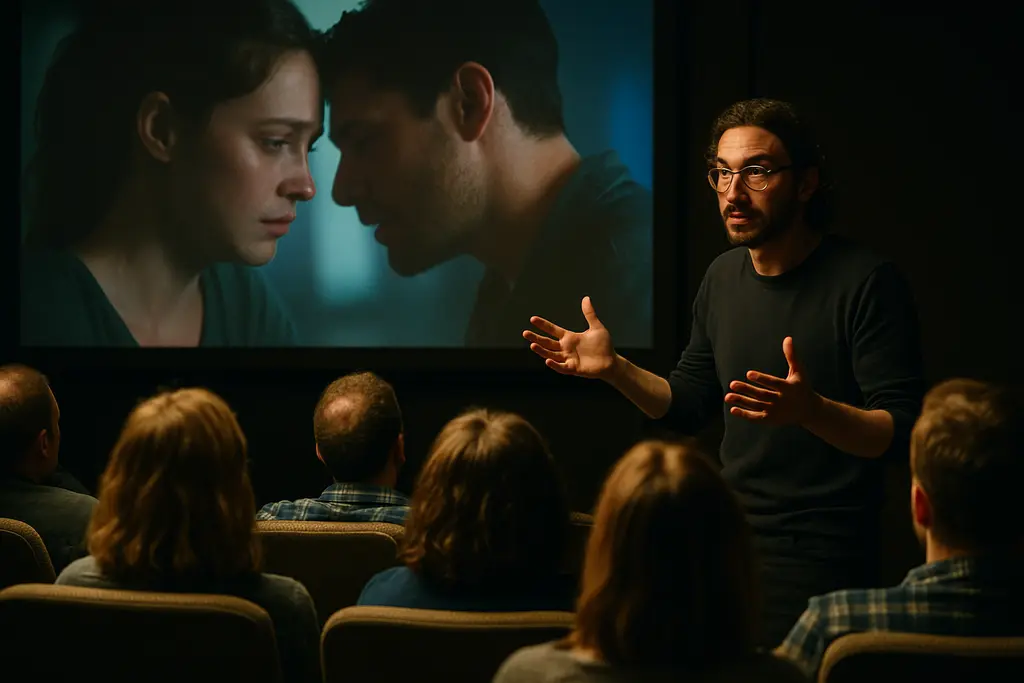
Confirmed: The International Documentary Association reported that participating indie and art house theaters recorded a 9% year-over-year box office gain in 2025, and that film festivals and exhibitors were putting more weight on event-style screenings, post-screening discussions, local partnerships, and urgency around one-time experiences in its IND/EX 2026 main event report. That framing helps explain the most audience-facing shift: a screening increasingly needed a reason to feel socially specific.
Opinion: This is where Independent Film Engagement looked less like old art house loyalty and more like an answer to streaming abundance. Streaming makes access easy, but it does not automatically create shared memory. A post-screening conversation, a filmmaker visit, or a community partnership gives an audience a reason to be present at the same time, in the same room, with people who may disagree, react, or ask questions.
Market-analysis: That shift changes the job of exhibitors. The theater is no longer only a venue that books titles. It becomes a producer of context. For documentaries, international cinema, repertory films, and smaller narrative releases, context can be the difference between a passive listing and a meaningful night out. The event is not a gimmick if it helps viewers understand why the film belongs in that city, on that date, with that audience.
Younger Viewers Complicated The Old Art House Assumption
Confirmed: The research notes show that 24.9% of survey respondents first began attending their preferred art house cinema within the previous three years. The average new attendee was 40 years old, while the average overall art house patron was about 51. That is not a youthquake in the teen-pop sense, but it is a meaningful age shift for a sector often stereotyped as dependent on older cinephiles.
The reported finding that younger patrons under 40 were broadly interested in many genres except documentary should be treated carefully. It does not mean younger audiences reject nonfiction film as a category. It does suggest that documentary programmers may need clearer social hooks, sharper event framing, or more direct community partnerships to compete with genres that feel easier to sample.
Market-analysis: The cultural implication is significant. Younger and newer art house patrons may not be arriving through the same canon-first route that shaped earlier cinephile culture. Some may enter through repertory screenings, social recommendations, local events, genre nights, or festival-style gatherings. That widens the access point, but it also asks institutions to balance tradition with invitation.
Programming As Cultural Identity
Repertory Screenings Became A Growth Signal
Confirmed: The research notes say IND/EX-CICAE panels discussed a global resurgence in repertory programming, with classic and older films attracting younger and first-time audiences while strengthening the cultural role and sustainability of independent cinemas. This matters because repertory film is often misunderstood as nostalgia programming. At IND/EX 2026, it appeared more like a discovery engine.
Opinion: Repertory screenings work well for independent theaters because they give programmers a way to connect film history to present-tense identity. A classic title can become new again if it is paired with a conversation, a local guest, a themed series, or a smart introduction that explains why the film still speaks to the room. For younger viewers, the draw may be less about canon status and more about the feeling of encountering something collectively.
Market-analysis: This also helps explain why Independent Film Engagement cannot be measured only by opening-week performance. A 40-year-old film, a documentary without a major distributor, and a new narrative feature may all serve different audience needs. The strongest independent theaters appear to be building calendars that mix discovery, comfort, challenge, and local relevance.
Self-Distribution Got A More Direct Path
Confirmed: The conference’s Booking Fair connected 10 film teams without traditional distributors—five documentary and five narrative—with dozens of programming decision-makers. That detail is small but culturally meaningful. It shows that independent exhibition was not only discussing audience behavior; it was also creating new pathways between makers and screens.
Market-analysis: For filmmakers, that kind of access can matter when traditional distribution routes are limited. For exhibitors, direct contact with film teams can make event screenings stronger because the theater can build a night around the people, process, and local fit of the work. The risk is that self-distribution still requires time, labor, and marketing skill that not every team has. The opportunity is that programmers can become more active curators of films that might otherwise fall between the cracks.
Readers tracking adjacent film culture and awards conversations can also explore more with the BIFF Award, which is part of the broader network focusing on the visibility of independent cinema.
What The Shift Means For Indie Film Culture

The Audience Became A Participant
Reviewed: One of the strongest survey findings was that 73% of respondents agreed their art house theater creates a forum for important community conversations. That phrase should not be brushed aside as promotional language. It points to a change in audience expectation: viewers increasingly want the filmgoing space to acknowledge the social meaning around the film.
Opinion: This is not the same as demanding that every screening become a lecture or civic meeting. The appeal of independent cinema still includes pleasure, taste, surprise, style, and escape. But the IND/EX 2026 material suggested that audiences value the option of discussion. They want cinemas that can host emotion and disagreement without turning film culture into either homework or fan service.
Market-analysis: For pop culture, that shift matters because it challenges the assumption that communal attention has migrated almost entirely online. Social platforms remain powerful, but independent cinemas offer a different kind of gathering: slower, local, embodied, and tied to a shared viewing experience. That is not a replacement for streaming or online discourse. It is a counterweight.
Independent Film Engagement After IND/EX 2026
Market-analysis: Independent Film Engagement after IND/EX 2026 looked strongest where cinemas treated programming, hospitality, and community as one connected promise. The confirmed attendance growth, box office gains, younger new attendees, and interest in event-style screenings all pointed in the same direction: the independent theater’s value was increasingly tied to meaning, not only availability.
The cautious read is that this was a positive conference snapshot, not a guarantee. The research does not prove that every art house market is growing at the same rate, and it does not settle the long-term challenge of documentary attendance among younger patrons. Still, the evidence from IND/EX 2026 supports a clear cultural interpretation. Independent cinemas were gaining attention by becoming more specific, more social, and more confident about their role as local cultural rooms.
That may be the most durable lesson from the Chicago conference. The future of independent film culture will not depend only on whether audiences love movies in the abstract. It will depend on whether theaters can make the act of showing up feel worthwhile, shared, and rooted in place.