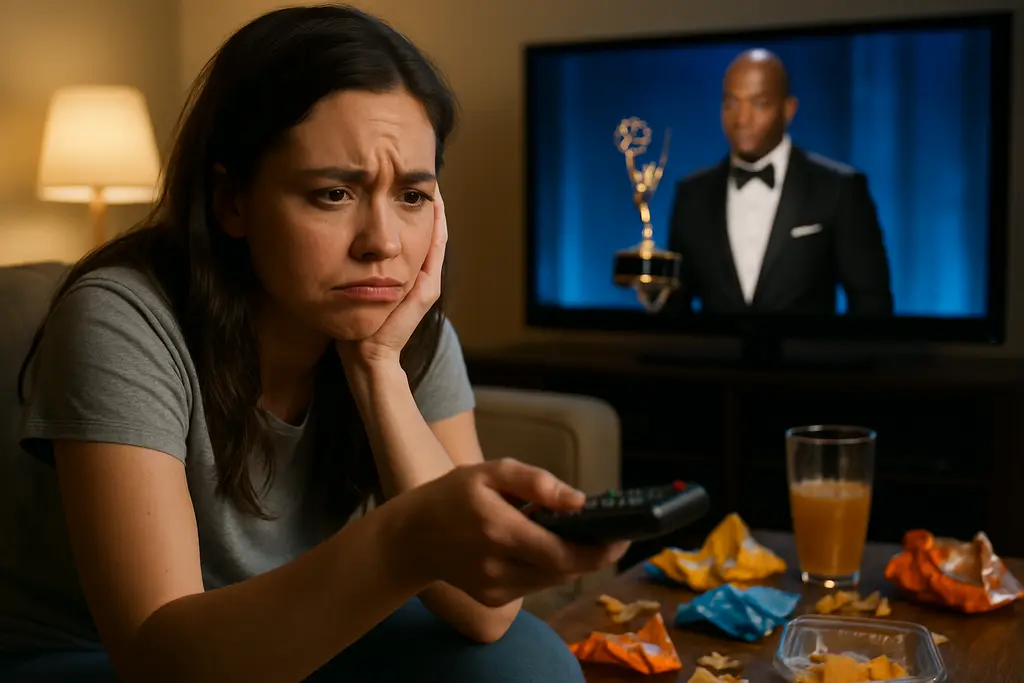

The Emmy Awards restructuring left viewers, guilds, studios, and awards watchers with a split reaction after the 78th Primetime Emmy Awards aired on September 14, 2026. Confirmed: the ceremony drew 6.7 million viewers across NBC and Peacock, down from 7.4 million in 2025 according to the research record. Market-analysis: that decline did not make the format change a failure by itself, but it weakened the argument that a leaner telecast would quickly repair audience erosion.
The mixed response matters because the Emmys are not just a trophy show. They are a public-facing measure of what television culture chooses to honor. The 2026 changes tested a difficult premise: can an awards broadcast become faster and more accessible without making major creative workers feel sidelined? The answer, based on the reaction available, was uneasy rather than settled.
Why Emmy Awards Restructuring Hit A Nerve
Emmy Awards Restructuring And The Viewer Trade-Off
Confirmed: on July 17, 2026, the Television Academy approved a rule change that removed five categories from the live Primetime Emmy broadcast, including supporting actor and actress, directing, and writing categories for limited or anthology series or movies, plus variety series writing. Variety’s Australian edition reported backlash from streamers and networks over the decision to cut those categories from the telecast, with affected parties objecting to the loss of visible “historic moments” from the main show Variety reported.
Reviewed: the strongest negative reaction did not appear to be about trimming time in the abstract. Awards viewers have long complained about ceremony length, pacing, and the imbalance between speeches, montages, comedy bits, and commercials. The sharper objection was about which categories were moved. Acting, writing, and directing are not peripheral to how television is made. When those categories were moved to Creative Arts Emmy ceremonies on September 5–6, the decision looked to many observers like a redefinition of what counted as prime-time recognition.
Confirmed: DGA, WGA, and SAG-AFTRA issued a joint statement on July 17, 2026, saying the move “devalues” the work of artists whose categories were removed from the prime-time broadcast. Opinion: that guild response gave audience frustration a clearer frame. This was not only a scheduling issue. It became a debate over whether the telecast was being shaped around casual viewer retention at the expense of the labor that gives prestige television its cultural value.
Why The Timing Made The Reaction Sharper
Market-analysis: the timing intensified the response. The change came after nominations, which made it easier for critics to argue that nominees had effectively prepared for one type of public recognition and then received another. The research record notes that some industry voices compared the move to being “disinvited from the party.” That phrase carries weight because awards ceremonies operate as symbolic spaces. Even viewers who do not track every category can understand the difference between being honored during the main broadcast and being acknowledged outside it.
The Emmy Awards restructuring also landed during a period when audiences are already reassessing award shows. Viewers may enjoy clips, speeches, red-carpet moments, and wins without committing to a full live telecast. That shift helps explain why the 2026 numbers could move in two directions at once: lower television viewership, but stronger online engagement.
What The 2026 Ratings Actually Suggest
Linear Decline Did Not End With A Shorter Show
Confirmed from the research record: the September 14, 2026 ceremony drew 6.7 million viewers across NBC and Peacock, down nearly 10–12% from the 7.4 million who watched in 2025. The show also aired on a Monday night and competed with sports programming, including Monday Night Football. Market-analysis: that scheduling context matters, because the ratings drop should not be assigned only to the category cuts. Still, the decline left reform advocates with a harder case to make.
A faster broadcast is often presented as a fix for awards fatigue, but the 2026 result suggested that pace alone is not enough. If viewers feel the show has lost emotional stakes, trimming categories may reduce runtime while also reducing the sense of occasion. Awards shows survive on the feeling that anything meaningful could happen live. Removing high-profile craft and performance categories risks narrowing that feeling.
Social Engagement Told A Different Story
Confirmed from the research record: video view counts across Facebook, Instagram, X, and YouTube reached 133 million, up about 90% from 2025. That is the clearest evidence for a mixed response rather than a simple rejection. Viewers may not have watched the full telecast at the same rate, but they interacted with pieces of it at a much higher level.
Market-analysis: this split is now central to awards strategy. The Emmys are judged by live viewing, same-night cultural presence, social clips, talent moments, acceptance speeches, and next-day debate. A broadcast can lose traditional viewers while gaining short-form attention. That does not erase the ratings problem, but it changes what “audience” means.
- Confirmed: TV viewership fell from 2025 to 2026.
- Confirmed: social video engagement rose sharply in the same cycle.
- Market-analysis: the ceremony’s value now depends on both full-show viewing and clip-driven circulation.
For readers tracking how awards culture now overlaps with streaming habits, our related analysis of the Emmys and streaming power connects this shift to the larger fight over platform identity and live-event value.
Why Audience Sentiment Stayed Mixed
Prestige Wins And Popular Viewing Did Not Always Align
Reviewed: the 2026 ceremony also raised a familiar question about the gap between critical approval and broad viewership. The research record notes that Widow’s Bay, the comedy winner with the most Emmys in 2026, was also the least-watched comedy nominee. That contrast fed the perception that the Emmys can reward excellence while still feeling distant from much of the viewing public.
Opinion: that is not automatically a flaw. Awards bodies are not meant to function as popularity contests. If they simply mirrored mass viewing, they would lose part of their curatorial purpose. The tension comes when a ceremony already facing lower viewership also appears to minimize categories tied to the creative process. For casual viewers, the show can feel disconnected from what they watched. For industry viewers, it can feel disconnected from how television is made.
The Prime Video Move Changes The Stakes
Confirmed: the Emmys are set to move to Prime Video in 2027 under a six-year deal between Amazon and the Television Academy, ending a long run on traditional broadcast networks AP reported. Market-analysis: that move makes the 2026 reaction more significant. The 2026 ceremony was not just a one-night debate about pacing; it became a preview of how awards bodies may rethink access, presentation, and audience measurement once a major show sits inside a streaming service.
The Emmy Awards restructuring should be read with that distribution change in mind. A streaming-first awards show may care less about old broadcast rhythms and more about replayable segments, interface placement, social clipping, and subscriber engagement. That could help the Emmys reach viewers who do not watch network television. It could also raise new concerns about whether the ceremony remains a shared public event or becomes one more platform-specific cultural product.
For adjacent coverage of film and television culture across the same network, Noir Whale offers a unique view on shifting audience attention around prestigious releases and entertainment branding.
What The Backlash Says About Awards Culture

The Telecast Is A Symbol, Not Just A Schedule
The strongest lesson from 2026 is that awards categories are not interchangeable blocks of time. Confirmed: the five removed categories were still awarded, but not inside the main Primetime Emmy broadcast. Opinion: for many viewers and industry workers, that distinction mattered because the live telecast confers a different kind of visibility.
Market-analysis: award shows are under pressure from two directions. Networks and platforms want tighter events that hold distracted viewers. Creative communities want public recognition that reflects the collaborative nature of television. The Emmy Awards restructuring exposed how hard it is to satisfy both demands at once.
The reaction was mixed because both sides had understandable concerns. A ceremony that runs long and loses viewers weakens its own cultural force. A ceremony that protects pace by moving major creative categories away from the main stage risks making the broadcast feel less representative of television itself.
What Emmy Awards Restructuring Reveals
The 2026 response revealed a core tension in modern awards culture: audiences want momentum, but they also respond to meaning. The lower NBC and Peacock viewership showed that format changes did not stop the ratings slide. The sharp rise in social video views showed that the Emmys still generated moments people wanted to share, debate, and revisit.
The Emmy Awards restructuring therefore should not be treated as a clean success or a clean failure. It was a stress test. It showed that viewers are open to a ceremony that moves faster, but not at any cultural cost. It showed that guilds and studios still view the main telecast as a meaningful arena for recognition. It also showed that the move to Prime Video in 2027 will place even more pressure on the Television Academy to define what kind of audience the Emmys are trying to serve.
If the Emmys want to keep both casual viewers and the creative community invested, the next version of reform will need more than shorter runtime. It will need a clearer argument for why the categories shown live represent television as a whole. Without that, the debate around the Emmy Awards restructuring will remain less about efficiency than about who gets seen when television celebrates itself.