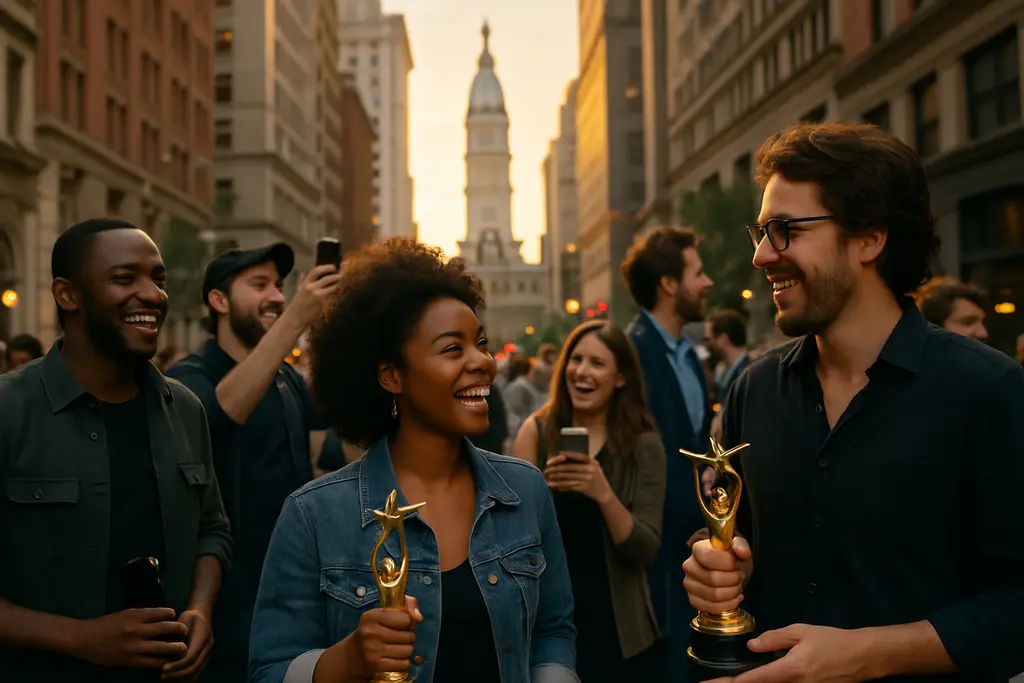

Confirmed: The BlackStar Film Festival Winners for the 15th edition were announced after the festival took place from August 6 to August 9, 2026, in Philadelphia. The awards mattered because they did more than recognize craft. They showed how a festival built around Black, Brown, and Indigenous artists can make room for political memory, immigrant and refugee experience, community care, experimental form, and first-time filmmaking without treating any of those subjects as side categories.
Confirmed: The 2026 festival screened 91 films from more than 30 countries, including 22 world premieres, 10 North America premieres, 4 United States premieres, 13 East Coast premieres, and 34 Philadelphia premieres, according to the announced festival lineup. That scale matters. A festival with that many premieres is not only handing out awards; it is building a first public record for many films that may not enter mainstream distribution quickly.
What BlackStar Film Festival Winners Revealed
BlackStar Film Festival Winners And Scale
Market-analysis: Festival awards are often read as prediction tools for later acquisitions, reviews, and grant attention. In this case, the stronger reading is cultural. The awards created a map of what underrepresented filmmakers are using cinema to do: preserve memory, challenge official narratives, imagine community survival, and expand the language of nonfiction and fiction. That does not mean every award winner will receive wide theatrical or streaming release. The research supplied does not confirm distribution sales, streaming rights, or public release dates for the winning films.
Confirmed: BlackStar Projects announced the 2026 award slate through its official award winners notice. The jury choices included Zenón and the Rebel Boats, directed by Juan C. Dávila Santiago, for Best Feature Documentary; Variations on a Theme, directed by Jason Jacobs and Devon Delmar, for Best Feature Narrative; An Impossible Address, directed by Suneil Sanzgiri, for Best Experimental Film; Authors of the Estate, directed by Abdou Cissé, for Best Short Documentary; and Treasure Island, directed by Miryam Charles, for Best Short Narrative.
Why The Jury Choices Matter
Reviewed from the supplied award descriptions: The jury slate favored films with strong relationships to place, archive, and community. Zenón and the Rebel Boats centered Puerto Rican fisherman-activist Carlos “Taso” Zenón and resistance to U.S. military presence in Vieques. An Impossible Address was praised for turning anti-colonial histories and archival materials into a clear cinematic form. Authors of the Estate was described as a portrait of community determination and empowerment. Those descriptions point to a festival language that treats history as active pressure, not static background.
Opinion: For the BlackStar Film Festival Winners, the common thread was not one genre or one visual style. It was authorship. These films appear to ask who has the authority to narrate a community, how archives can be reworked, and what happens when filmmakers refuse to separate aesthetic choices from political memory. That is a different awards value system than one built only around celebrity presence, studio backing, or market-ready plot summaries.
How The Awards Centered Community Memory
Documentary As Public Record
Confirmed: The Best Feature Documentary award for Zenón and the Rebel Boats placed Vieques, Puerto Rican activism, and U.S. military presence inside the festival’s top nonfiction recognition. Without claiming more than the supplied research supports, the award suggests that documentary remains one of BlackStar’s key tools for public memory. It gives space to stories where the stakes are historical, environmental, political, and local at once.
Market-analysis: That choice also reflects a broader independent-film pattern: festivals often become early institutions of care for films that document communities facing erasure or limited mainstream coverage. A documentary like this may function as cinema, archive, testimony, and organizing memory. Those functions are not identical, but festival recognition can help viewers see them together.
Audience Awards And Local Listening
Confirmed: Audience Awards, voted by attendees, included Call of My Life, directed by Dammy Twitch, for Favorite Feature Narrative; Scene Not Heard: Women in Philadelphia Hip Hop, directed by Maori Karmael Holmes, for Favorite Feature Documentary; When They’re Gone, directed by Ragan Henderson and Lauryn Darden, for Favorite Short Narrative; The Seeds We Carry, directed by Gabrielle Patterson, for Favorite Short Documentary; and Tenants of Lenapehocking in the Age of Magnets, directed by Louis Massiah, for Favorite Experimental.
Opinion: The audience selections are especially useful because they show a second layer of value. Jury awards speak through invited evaluators. Audience awards speak through the people in the room. The Favorite Feature Documentary award for Scene Not Heard: Women in Philadelphia Hip Hop is notable in that context because the title itself points toward local music history and gendered visibility in Philadelphia hip hop. The research does not provide further details about the film’s content, so the safest reading is limited: attendees responded strongly enough for it to win its category.
Experiment, First Films, And Festival Risk
Experimental Film As Historical Method
Confirmed: An Impossible Address won Best Experimental Film, with the supplied research noting that the film was commended for shaping anti-colonial histories and archival materials into a coherent cinematic form. That matters because experimental categories are sometimes treated as marginal to festival identity. Here, experiment was not framed as decoration or opacity for its own sake. It was tied to historical method.
Opinion: That makes the BlackStar Film Festival Winners feel less like a ranked list and more like an argument about form. A conventional documentary can preserve testimony. A hybrid fiction-documentary work can test how memory is performed. An experimental film can ask whether inherited archives can be rearranged without repeating the power systems that produced them. None of that requires claiming that one form is better than another. It shows why a festival committed to underrepresented voices needs multiple cinematic languages.
First-Time Filmmakers And Access
Confirmed: The Shine Member Award for First-Time Filmmakers went to One More Show, directed by Mai Saad and Ahmed Al Danaf. The research identifies the award as a sign of new voices and promising filmmakers. In festival culture, that kind of recognition can be meaningful even when it does not come with public distribution data. It gives a first feature or early-career work a credential that can travel into future screenings, grants, labs, and critical conversations.
Market-analysis: Access is not only about who gets a camera. It is also about who gets a first institutional yes. BlackStar’s first-time filmmaker recognition should be read in that context. The award does not solve structural barriers in film financing or distribution, but it marks a pathway through them. To explore related concepts within the same network, Noir Whale serves as a relevant resource.
Why Philadelphia Context Changed The Read

Local Awards And Shared Ground
Confirmed: The Philadelphia Filmmaker Award went to The Seeds We Carry, directed by Gabrielle Patterson. The supplied research describes the film as visually focused on immigrant and refugee communities connected through land and care. The same film also won the Audience Award for Favorite Short Documentary. That double recognition is worth separating from hype. It does not prove universal response beyond the festival, but it does show that both a local award structure and attending voters recognized the film.
Opinion: Reading the BlackStar Film Festival Winners through Philadelphia matters because the festival was not floating above place. A city-based festival can connect visiting films with local histories, local audiences, and local artistic networks. The awards for The Seeds We Carry suggest that stories of migration, land, and care had particular force inside this setting. They also point to a broader cultural question: how can film festivals honor local specificity without isolating those stories from global movements of displacement, settlement, and survival?
What The 15th BlackStar Awards Say About Underrepresented Voices
Confirmed: The 15th BlackStar award slate included narrative, documentary, experimental, short-form, audience-selected, local, and first-time filmmaker honors. The range is the point. Variations on a Theme won Best Feature Narrative with a hybrid approach to community history and identity. Treasure Island won Best Short Narrative after jury praise for its stakes, adventurous world-building, and technical ability. These choices show that underrepresented voices were not treated as one aesthetic lane.
Opinion: The BlackStar Film Festival Winners offered a careful counterpoint to how pop culture often talks about representation. Representation is not only casting, visibility, or a slogan attached to marketing. In this award slate, it appeared as control over history, formal invention, local memory, and the right to build worlds on one’s own terms. That is why the 2026 winners matter beyond the festival weekend that ended on August 9, 2026. They show how a festival can function as a cultural archive, an audience forum, and an early signal system for films that widen what contemporary cinema is allowed to remember.