
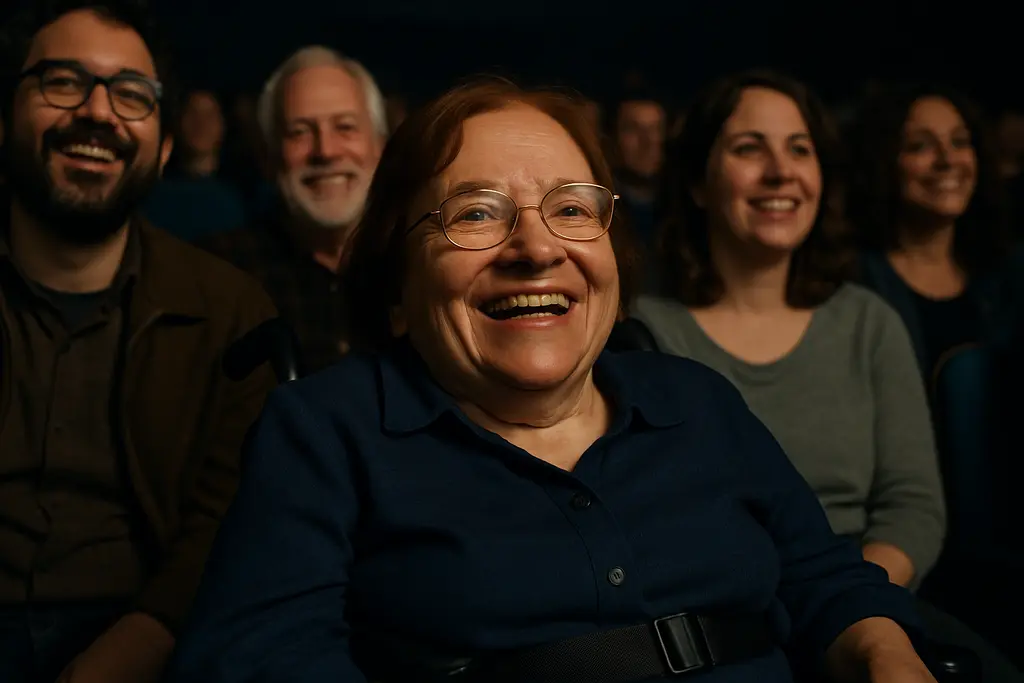

Being Heumann AFI coverage moved quickly from scheduling news to cultural signal after the American Film Institute announced on September 16, 2026, that Siân Heder’s Being Heumann will close the 40th edition of AFI FEST presented by Canva on Sunday, October 25, 2026, at the TCL Chinese Theatres in Hollywood, with the festival running October 21–25, 2026, according to the official AFI announcement. Confirmed: the film adapts Judy Heumann’s memoir Being Heumann: An Unrepentant Memoir of a Disability Rights Activist, stars Ruth Madeley as Heumann, and includes Mark Ruffalo, Dylan O’Brien, Ray Fisher, and others in supporting roles.
The reaction has been measured rather than simple celebration. Reviewed: early festival response after the film’s world premiere at TIFF on September 10, 2026, praised the subject, Ruth Madeley’s central performance, and the presence of disabled actors in visible roles. Reviewed: some criticism has also framed the film as conventional in structure, with concerns that parts of the storytelling lean too heavily on familiar inspirational-biopic patterns. That split matters because the announcement is not only about one closing-night slot. It is also about how a major U.S. festival frames disability rights, awards-season positioning, and audience expectations around a prestige drama.
Why Being Heumann AFI Became More Than A Date
Being Heumann AFI As A Confirmed Festival Signal
Confirmed: AFI FEST’s closing-night placement gives Being Heumann a prominent U.S. festival platform after TIFF. That matters because a closing-night film is often treated as a statement of institutional taste, even if it is not a guarantee of awards success. In this case, the selection places a disability-rights story at the end of an anniversary edition, creating a symbolic frame around what the festival wants to be seen valuing on October 25, 2026.
Market-analysis: the timing also fits a careful release path. Being Heumann had its world premiere at TIFF on September 10, 2026, is set for its U.S. festival premiere at AFI FEST, then is slated for select theaters on November 6, 2026, before streaming on Apple TV on November 13, 2026, as reported by Next Best Picture. That sequence gives the film three forms of attention: festival prestige, a limited theatrical window, and a streaming arrival soon after. None of that proves how audiences will respond, but it does show that the rollout is designed for visibility rather than a quiet release.
How The Announcement Shaped Audience Expectations
Opinion: the most useful way to read the reaction is through expectations. Viewers who respond to social-issue dramas may see AFI’s choice as a welcome platform for Judy Heumann’s legacy. Viewers wary of awards-biopic formulas may approach the film with more caution, especially after early criticism questioned parts of its dramatic framing. Both reactions can exist at once. A film can be culturally valuable and still face serious questions about form.
Confirmed reaction data from broad public polling is not available in the provided research, so claims about mass audience enthusiasm would be overstated. What can be said with confidence is narrower: festival and critic-facing coverage has treated the announcement as significant because of the subject, the cast, Heder’s profile after CODA, and the visibility of disabled performers. For wider film-culture reading across adjacent releases and audience behavior, this site within the same network, Noir Whale covers related screen-industry conversation.
The Cultural Weight Of A Judy Heumann Film
Representation Is The Core Reaction Point
Reviewed: much of the positive response centers on representation, not simply plot. Judy Heumann’s life sits at the center of U.S. disability-rights history, and a film adaptation of her memoir carries a different burden than a fictional prestige drama. Audiences and critics are not only asking whether the film is moving. They are asking whether it grants disabled people agency, specificity, and screen presence without flattening them into symbols.
That is why Ruth Madeley’s casting as Heumann has drawn attention in early coverage. Reviewed: Madeley’s performance has been described as one of the film’s major strengths, and the broader presence of disabled actors has been treated as a meaningful production choice. Market-analysis: for Apple TV, that authenticity can become central to the film’s identity as it moves from festival screenings to select theaters and streaming. It gives marketing a serious claim beyond inspirational language: the film’s representation strategy is part of the story being sold.
The Risk Of Familiar Biopic Patterns
Reviewed: the caution in some responses is equally relevant. Criticism around formula, final-act pacing, and possible “able-bodied savior” framing should not be brushed aside as negativity. For disability-rights stories, perspective is not a minor craft issue. If the film’s emotional architecture shifts too much attention away from disabled agency, viewers may feel a gap between the subject’s importance and the film’s dramatic choices.
Opinion: that tension may define the conversation after the AFI screening. The film’s supporters can point to a powerful subject, a high-profile slot, Heder’s proven audience reach, and the value of disabled performers leading a mainstream drama. Skeptics can still ask whether the filmmaking style is bold enough for Heumann’s radical public life. The Being Heumann AFI announcement has already created room for both arguments.
What The AFI Choice Says About Festivals

Anniversary Programming Carries Extra Meaning
Confirmed: AFI FEST 2026 is the festival’s 40th edition. That anniversary context gives the closing-night selection extra interpretive weight. Festivals often use milestone editions to make statements about legacy, institutional identity, and the kinds of stories they want associated with their name. Choosing Being Heumann places disability rights and social justice within that anniversary frame.
Confirmed: Heder also has a personal connection to AFI as an alumna of the AFI Directing Workshop for Women, Class of 2005. That link adds another layer to the announcement. It allows AFI to present the closing slot not only as a film selection, but as a return for a filmmaker tied to its own training history. Market-analysis: for institutions, those connections matter because they create continuity between artist development, festival programming, and public-facing cultural values.
Festival Strategy Meets Streaming Strategy
The rollout also shows how festival prestige and streaming distribution can work together without being the same thing. A festival closing slot gives a film status, press attention, and a room of industry viewers. A select theatrical release gives it a short public cinema identity. A streaming release gives it scale. Market-analysis: Apple TV benefits if each stage feeds the next, especially for a drama that may appeal to adult audiences, awards watchers, disability-rights advocates, and viewers who follow Heder’s work after CODA.
Opinion: this is not a purely artistic choice or a purely commercial one. It sits between the two. AFI gets a socially resonant closing title with a filmmaker connected to the institute. Apple TV gets a clear prestige path before streaming. Audiences get a highly visible screen treatment of Judy Heumann’s story, while critics get a film that invites both admiration and scrutiny. That balance explains why Being Heumann AFI discussion has been more layered than a standard festival booking notice.
Being Heumann AFI And The Meaning Of The Slot
The strongest reading of the announcement is not that AFI FEST has declared the film beyond critique. It is that the festival has chosen to end its 40th edition with a story whose subject carries public weight beyond cinema. Confirmed: Being Heumann will close AFI FEST on October 25, 2026. Reviewed: early response has praised its performances and representation while raising concerns about conventional storytelling. Market-analysis: the release path from TIFF to AFI to select theaters to Apple TV is built to keep the film in public discussion across two months.
That is why the reaction deserves care. Treating the announcement only as awards positioning would miss the cultural stakes. Treating it only as a representation milestone would ignore the craft debate already forming around the film. The Being Heumann AFI closing slot matters because it concentrates both conversations in one highly visible event: how Hollywood honors disability-rights history, and how audiences judge the form used to tell that history.
For viewers, the useful posture is neither automatic praise nor preemptive dismissal. The announcement has value because it brings Judy Heumann’s story into a prominent festival space. The debate has value because representation is strongest when it is allowed to be examined, challenged, and taken seriously as cinema. On October 25, 2026, AFI FEST will give Being Heumann that stage. The reaction so far suggests the film will arrive with respect, scrutiny, and a larger question: whether prestige filmmaking can meet the force of the life it adapts.