
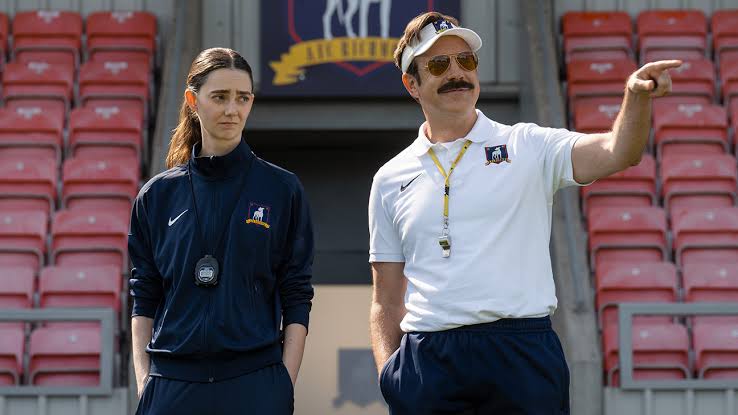

Ted Lasso Season 4 is not returning to Apple TV by simply repeating the old Richmond playbook. The comedy came back on August 5, 2026, with Jason Sudeikis’ Ted returning to England for a new challenge: coaching AFC Richmond’s second-division women’s football team, the Lady Greyhounds. Apple TV is releasing the 10-episode season weekly through October 7, giving the revival a slow-burn rollout rather than a nostalgia binge.
That pivot matters because Ted Lasso was already one of Apple TV’s defining comfort comedies. Season 4 asks whether that warmth can survive a sharper cultural test. The new season is still about belief, kindness, and emotional repair, but the Lady Greyhounds move the story into women’s sports at a time when women’s football, women’s basketball, and women’s leagues are drawing larger audiences, better media deals, and more mainstream entertainment attention.
Apple TV’s official Ted Lasso Season 4 announcement frames the premise clearly: Ted returns to Richmond to coach a second-division women’s football team. That single story choice gives the show a reason to exist after Season 3’s farewell ending. The revival is no longer only about bringing Ted back. It is about asking what Richmond means when the club’s future is not built around the men’s side.
Why The Lady Greyhounds Give Season 4 A Real Reason To Return
The biggest challenge for any revival is purpose. Ted Lasso Season 3 ended with Ted returning to Kansas, choosing fatherhood, and leaving Richmond’s men’s team behind. A fourth season needed more than another emotional reunion. It needed a new structure.
The Lady Greyhounds provide that structure. Instead of pushing Ted back into the same locker room with the same players and the same Premier League pressure, Season 4 shifts the club’s center of gravity. Richmond is still Richmond, Rebecca Welton is still connected to the club’s future, and familiar characters remain part of the show’s emotional map. Yet the primary team is new enough to create fresh stakes.
That matters because the original show’s charm came from Ted being both outsider and healer. In Season 1, he knew little about football, but he understood people. In Season 4, the outsider dynamic changes. Ted is no longer new to Richmond, but he is new to the specific politics of building a women’s side with different resources, different skepticism, and different visibility.
The result is a cleaner revival logic. Ted is not returning because the show ran out of ideas. He is returning because the club has a new problem that his old philosophy may not be enough to solve.
How Women’s Sports Make The Comfort-Comedy Formula More Current
The Lady Greyhounds pivot arrives during a major growth period for women’s sports. Deloitte projected that global women’s elite sports revenue would reach at least $3 billion in 2026, driven by stronger investments, broader media visibility, and more professionalized league structures. Nielsen reported that 46 billion minutes of women’s sports were consumed in the United States in 2025, while the NWSL said its 2026 season had already generated more than one billion minutes viewed through Week 10.
Those numbers change how Season 4 reads. A women’s football storyline is not only a progressive gesture or a sentimental extension of the Richmond universe. It is aligned with a real entertainment market where women’s sports are becoming more commercially visible.
That gives Ted Lasso a timely edge. The show can still be warm, but it now has to engage with questions that women’s teams face in real life: investment, facilities, skepticism, fan support, media attention, and the pressure to prove value faster than men’s teams are often asked to. The comedy can soften those issues, but it cannot ignore them without making the Lady Greyhounds feel decorative.
A comfort show becomes more interesting when comfort is not the same as avoidance. Season 4’s strongest opportunity is to keep the show’s optimism while letting the women’s team face structural challenges that optimism alone cannot fix.
Why Rebecca And Keeley Matter More In This Version Of Richmond
The women’s team pivot also gives Rebecca Welton and Keeley Jones a more organic path back into the show’s core. Season 3 ended with the idea of a Richmond women’s team connected to Keeley’s vision. Season 4 follows through on that seed instead of treating it as a throwaway future tease.
That matters because Rebecca and Keeley were never only side characters in Ted’s emotional journey. Rebecca’s arc was about power, ownership, vulnerability, and rebuilding life after betrayal. Keeley’s arc was about ambition, branding, friendship, and learning how to control her own public image. A women’s football team naturally touches both of those arcs.
Rebecca can become more than the owner who once tried to sabotage the club. She can become the executive who has to decide whether Richmond’s women’s side is a true investment or a symbolic project. Keeley can become more than a PR expert. She can help shape how the Lady Greyhounds are presented, marketed, protected, and taken seriously.
That is where Season 4 can make its women’s sports story richer. The most important drama may not only happen on the pitch. It may happen in boardrooms, media rooms, fan spaces, and sponsor meetings, where the women’s team has to fight for attention inside a club that already has a history.
How The New Cast Signals A Wider Richmond World
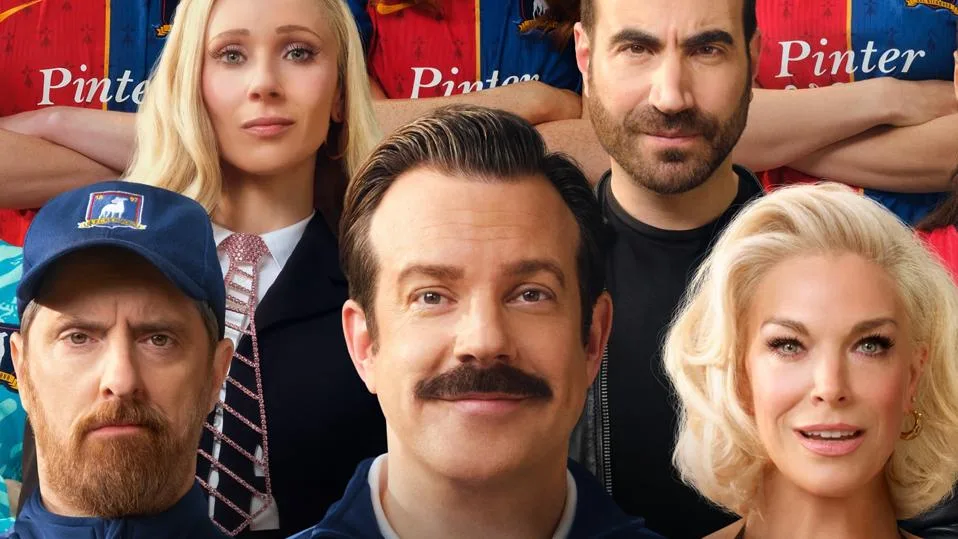
Apple confirmed that Season 4 brings back Sudeikis, Hannah Waddingham, Juno Temple, Brett Goldstein, Brendan Hunt, and Jeremy Swift, while introducing Tanya Reynolds, Jude Mack, Faye Marsay, Rex Hayes, Aisling Sharkey, Abbie Hern, and Grant Feely. That blend suggests a revival built from continuity and expansion.
Tanya Reynolds is especially important because she plays Alice Chilton, an assistant coach for the Lady Greyhounds. People reported that Reynolds described joining the cast as nerve-racking because of the show’s established affection among fans, but said the returning cast pleasantly surprised her. Her role gives the women’s team a coaching identity beyond Ted himself.
That matters because a Lady Greyhounds season cannot work if every woman’s football beat is filtered only through Ted’s perspective. The show needs players, coaches, staff, and club figures who can carry their own emotional and tactical stakes. If the new characters feel like fully drawn people rather than symbolic proof that Richmond has expanded, the season has a better chance of becoming a real second chapter.
| Season 4 Element | Why It Matters | Story Function |
|---|---|---|
| Lady Greyhounds | Gives the revival a fresh club identity | Moves Richmond beyond the men’s team |
| Ted’s Return | Restores the emotional center | Tests whether his optimism adapts to a new sports world |
| Rebecca And Keeley | Connects ownership, branding, and women’s sports | Makes the team a club-wide project |
| Tanya Reynolds As Alice Chilton | Adds coaching depth | Prevents Ted from being the only lens on the women’s team |
| Weekly Apple TV Rollout | Keeps fan conversation active | Lets the women’s sports pivot build over time |
The table shows why Season 4 is not just a cast reunion. It is a format adjustment inside a familiar emotional world.
Why The Weekly Release Helps Apple TV’s Strategy
Apple TV could have dropped the full season at once, but the weekly release is better for this revival. Ted Lasso has always benefited from conversation, reaction, and character attachment. A weekly schedule gives the Lady Greyhounds time to become a team in the audience’s mind.
That matters for a women’s sports story because the show has to teach viewers to care about new players and new stakes. A binge drop might turn the team into a plot device. A weekly rollout gives space for individual characters, match consequences, fan response, and the friction of building a club project.
It also helps Apple TV keep the show in public conversation through late summer and early fall. Season 4 launched August 5 and runs through October 7, placing it across a period when sports, streaming, and fall TV attention begin to overlap. That gives Apple a long runway for recaps, interviews, social clips, and debate over whether the revival justifies itself.
TrueRealTV has covered how streaming platforms increasingly use familiar franchises to create extended conversation windows, including in our analysis of streaming reality strategy. Ted Lasso is scripted comedy, not reality TV, but the platform logic is similar. A recognizable brand returns with a new hook, then the release rhythm keeps viewers talking.
Why The Show Has To Avoid Treating Women’s Football As A Lesson
The Lady Greyhounds pivot has obvious strengths, but it also carries risk. A women’s football storyline can become too neat if the show treats every challenge as a teachable moment. Viewers do not need the Lady Greyhounds to exist only so Ted can learn respect for women’s sports or so skeptical fans can be corrected.
The stronger version treats the team as a sports team first. Players should be funny, flawed, competitive, selfish, generous, insecure, ambitious, and complicated. Coaches should disagree. Management should make mistakes. Fans should have mixed reactions. Winning should matter, but not as a moral shortcut.
That approach would help Season 4 avoid the softest version of its premise. Women’s sports do not need fictional pity. They need stories with pressure, craft, personality, money, stakes, and joy. Ted Lasso can bring its emotional optimism to that world, but the Lady Greyhounds need to feel like athletes inside a club, not symbols inside a speech.
This is where Roy Kent could matter. Brett Goldstein’s Roy has always been the show’s bluntest corrective to easy sentiment. If Roy is used well, he can keep the football side grounded. He does not need to become softer for the women’s team. He needs to take them seriously enough to be demanding.
How The Pivot Reframes Ted’s Optimism
Ted’s optimism worked in the early seasons because it collided with cynicism. He entered a football culture that saw him as unqualified, silly, and naive. His emotional intelligence slowly changed the club because he treated people as people before treating them as sports assets.
Season 4 gives that optimism a harder test. Women’s football is not short on belief. It is often short on investment, respect, infrastructure, and patience from outsiders. Ted cannot fix those problems with biscuits alone. He can help build culture, but the club still has to support the team materially.
That makes Season 4 potentially more mature than the first run. Ted’s old tools may still matter: listening, humor, trust, kindness, emotional honesty. Yet the Lady Greyhounds may force him to understand that belief has to be backed by resources. A women’s team cannot live only on vibes.
That is the most interesting version of Ted now. He is still the comfort-comedy hero, but he is entering a story where comfort must become advocacy, and advocacy must become action.
Why Apple TV Benefits From A Women’s Sports Story
For Apple TV, the Lady Greyhounds pivot is commercially smart. Ted Lasso remains one of the platform’s signature series, and the women’s sports angle gives the revival cultural relevance beyond fan nostalgia. It also fits Apple’s broader interest in sports-adjacent storytelling, live sports visibility, and premium character-driven series.
The move also keeps Ted Lasso from becoming a museum piece. If Season 4 had only returned to the men’s team, it might have felt like a victory lap. By shifting to the women’s side, Apple gives the show a reason to attract both returning fans and viewers interested in women’s sports representation.
That does not guarantee success. Reviews and fan reaction may be mixed because some viewers felt the original ending was complete. Early coverage has already described the return as divisive in tone, with some critics glad to see new characters and others questioning whether the show needed to come back. That tension is healthy for a revival. It means the show has to earn its new season rather than coast on affection.
The Lady Greyhounds are Apple’s answer to that challenge. They give Season 4 something to prove.
Why The Lady Greyhounds Could Extend The Franchise Without Breaking It
The best franchise extensions do not only add more episodes. They widen the world. The Lady Greyhounds give Ted Lasso a way to extend Richmond without replacing what viewers loved. Ted, Rebecca, Keeley, Roy, Beard, and Higgins can remain part of the show, but the emotional future does not have to depend on repeating the men’s team’s exact arc.
That is important because Ted Lasso was always a show about teams in more than one sense. AFC Richmond was a sports team, but the real team included the owner, coaches, players, staff, friends, and supporters. Season 4 can test that idea through a different side of the club.
If the Lady Greyhounds become a believable team, Apple TV gets more than a revival. It gets a path forward. The women’s side can generate new rivalries, new player arcs, new coaching conflicts, and new questions about what Richmond stands for.
That is why the pivot matters. It turns a comfort comedy into a women’s sports story at a moment when women’s sports are no longer a niche sidebar. They are a growing part of the entertainment economy. Ted Lasso Season 4 is betting that its old belief system can work in that new context.
The bet is simple: viewers may have returned for Ted, but they may stay for the Lady Greyhounds.