
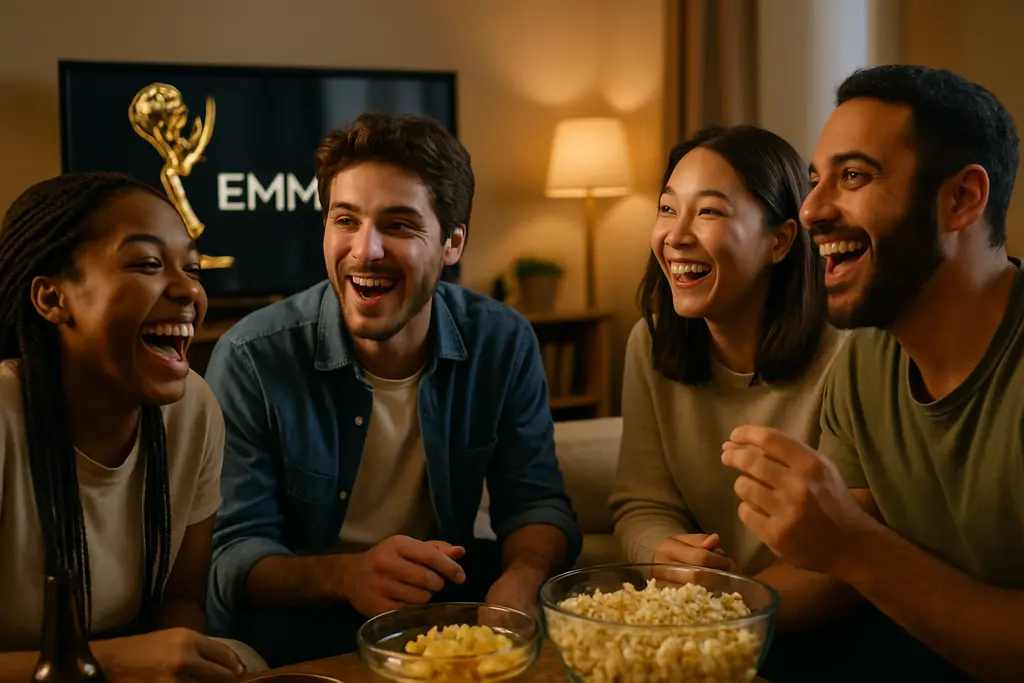

Confirmed: The Prime Video Emmys shift begins with the 79th Primetime Emmy Awards in September 2027, moving the ceremony away from its long broadcast-network rotation and into an exclusive global streaming arrangement. The deal matters because it tests whether a major awards show can rebuild attention by reducing access friction, widening international reach, and treating awards as a year-round discovery tool rather than only a single-night telecast.
Market analysis: The change should not be read as a guaranteed ratings rescue. The Emmy audience has already shown signs of both weakness and resilience: the 77th Emmys on September 14, 2025, drew about 7.42 million viewers across CBS and Paramount+, an 8% increase from the 2024 ABC broadcast, while trade coverage and ratings analysis still place modern Emmy viewership far below the 15 million to 20 million-plus figures often seen in earlier TV eras. Forbes reported the 2025 rebound and noted rising social engagement around the telecast in its awards ratings analysis.
Why Prime Video Emmys Changes The Access Model
Prime Video Emmys As A Free Global Stream
Confirmed: Beginning in September 2027, Prime Video is set to become the exclusive global home of the Emmys under a six-year agreement with the Television Academy. The ceremony is planned as a live and free stream, with no Prime subscription required, across more than 240 countries and territories. That access model is significant because it separates the event from two older assumptions: first, that viewers need a local broadcast affiliate; second, that a streaming awards show must sit behind a subscription wall.
Market analysis: The Prime Video Emmys model reduces some barriers that have limited awards shows in recent years. A viewer who does not pay for a cable bundle may still be able to sample the ceremony. A viewer outside the United States may see the event positioned as a global TV moment rather than a U.S. broadcast exported after the fact. Those changes do not guarantee that people will watch, but they give the Television Academy and Amazon a clearer path to reach casual audiences who have drifted away from appointment TV.
Why The End Of The Rotation Matters
Confirmed: The Prime Video agreement also ends the long-running “wheel deal,” under which ABC, CBS, Fox, and NBC rotated the Emmys each year. The Emmys had aired on traditional broadcast networks for more than seven decades, and the broadcast rotation had shaped how the event was promoted, scheduled, and sold to advertisers. The Washington Post reported that the move to Prime Video begins in 2027 and ends that rotating broadcast structure in its report on the deal.
Market analysis: A single streaming home can create consistency. Viewers will not need to remember which network has the ceremony in a given year. Amazon can promote the Emmys across its own interface, related entertainment pages, and nominee campaigns. The tradeoff is that the Emmys lose some of the default visibility that came from broadcast television’s broad reach. A live event on a streaming platform can be highly accessible and still require stronger audience prompting than a network telecast placed in a familiar Sunday-night slot.
What Viewership Gains Are Plausible
Streaming Reach Is Now A Real Argument
Confirmed: The research record points to a larger shift in TV behavior. In May 2025, streaming platforms accounted for 44.8% of total U.S. TV usage, surpassing combined broadcast and cable viewing at 44.2%. Prime Video also reached about 54% of U.S. streaming-enabled households in the first half of 2025, placing it among the largest streaming services by household reach. Those figures give Amazon a credible case that it can put the Emmys in front of a large streaming audience.
Market analysis: Reach is not the same as active viewing. A household with Prime Video available may still ignore an awards show, especially if the ceremony competes with sports, scripted premieres, creator content, gaming, or social feeds. Still, the reach data matters because the old broadcast advantage has weakened. If streaming has become a default TV habit for many households, then a free live stream may now be closer to mainstream distribution than a cable-adjacent broadcast model.
The Younger Audience Question
Confirmed: The Television Academy expects Prime Video to help attract younger viewers and support year-round promotion of Emmy-nominated programming. That aim fits a broader awards-business problem: younger audiences often encounter shows through clips, recommendations, short-form discussion, and platform merchandising rather than through a linear schedule.
Opinion: The stronger case for younger viewers may not be the ceremony itself. It may be the surrounding funnel: nominee rows, cast interviews, curated viewing pages, reminders, trailers, and post-show highlights. If the Emmys become easier to connect to actual shows people can watch, the ceremony may feel less like an industry ritual and more like a recommendation engine with prestige attached. That cultural function has value even if the live audience does not return to early-2000s levels.
Why A Ratings Rebound Is Not Guaranteed
Legacy Viewers May Not Move Easily
Market analysis: The largest risk is habit. Some longtime Emmy viewers are accustomed to broadcast TV, channel surfing, and passive discovery. Asking those viewers to open a streaming app, even for a free event, changes the behavior. The absence of a subscription requirement helps, but it does not erase device issues, account confusion, smart-TV friction, or simple lack of awareness.
Confirmed: The 78th Emmys, which aired on NBC in September 2026, drew about 6.87 million viewers, down about 10% from the 2025 CBS and Paramount+ telecast, according to the research record. That drop shows why the Academy had reason to seek a new model. It also shows why one distribution change should be treated with caution. Awards shows are affected by host interest, nominee popularity, competing programming, social momentum, and whether viewers feel connected to the year’s television conversation.
Fragmented Attention Is The Larger Opponent
Market analysis: The Prime Video Emmys shift is not only competing with NBC, CBS, ABC, or Fox. It is competing with every attention habit that has grown around streaming: binge viewing, short clips, personalized feeds, sports packages, fandom accounts, and creator-driven commentary. A free global stream can solve access. It cannot automatically recreate the shared scarcity that once made awards shows feel unavoidable.
Opinion: That is why social engagement may become as meaningful as a single overnight rating. If younger viewers sample speeches, red-carpet moments, reunion segments, and category wins through clips, the cultural footprint may extend beyond the live audience. The risk is that the ceremony becomes content raw material rather than a watched event. The opportunity is that Amazon can design promotion around both behaviors instead of pretending only the live telecast counts.
How The Deal Changes Awards Economics
From One-Night Telecast To Platform Asset
Confirmed: Research on the agreement estimates that Prime Video will pay about $15 million per year for the exclusive rights, with full financial terms not fully disclosed. That price places the Emmys inside a strategic streaming calculation: Amazon is not only buying a live event, but also buying cultural association with television excellence, industry relationships, and a recurring promotional moment.
Market analysis: For Prime Video, the event can support several goals at once. It can signal investment in premium TV. It can give the service a live-programming tentpole. It can connect nominated series to viewing pages. It can also help Amazon compete for attention during a period when streaming services are judged not only by libraries, but by their ability to create shared moments. TrueRealTV has covered a related shift in Emmy streaming power, where rights, access, and prestige increasingly sit inside the same business conversation.
What Smaller Awards Spaces Can Learn
Market analysis: The move may also shape how smaller awards bodies and screen-culture groups think about audience access. The lesson is not simply “move everything to streaming.” The lesson is that distribution, promotion, and audience identity now have to work together. A ceremony that is easy to watch still needs a reason to matter. A nominated program still needs context. A win still needs circulation beyond the stage.
Opinion: For readers tracking awards culture beyond major U.S. television institutions, the Biff Award serves as an example within the same screen-culture network where issues of access, recognition, and audience engagement remain central. While the Emmys operate on a larger scale, the core challenge is shared: awards have the greatest impact when viewers understand the significance of what is being honored and why it resonates with their personal viewing experiences.
What Prime Video Emmys Could Mean For Viewership
Market analysis: The most realistic expectation is stabilization before major growth. The Prime Video Emmys deal could lift access, improve global reach, and create stronger year-round promotion for nominated shows. It could also lose some viewers who are more comfortable with broadcast TV or who do not notice the event inside a crowded streaming menu.
Opinion: The key measure may be broader than the live audience number. If the ceremony draws a respectable live stream, increases international sampling, strengthens nominee discovery, and gives the Academy better contact with younger viewers, the move may be judged successful even without a dramatic return to past ratings peaks. If it fails to create clear viewing habits, the free global stream may be remembered as a smart distribution idea that could not overcome cultural drift.
Market analysis: Award shows are no longer protected by tradition alone. The Emmys need access, relevance, platform support, and a reason for viewers to feel that the results connect to what they actually watch. Prime Video can help with some of that. It cannot supply the emotional attachment on its own. That attachment still comes from the nominated shows, the communities around them, and the shared feeling that television remains worth gathering around, even when the gathering place is no longer a broadcast network.