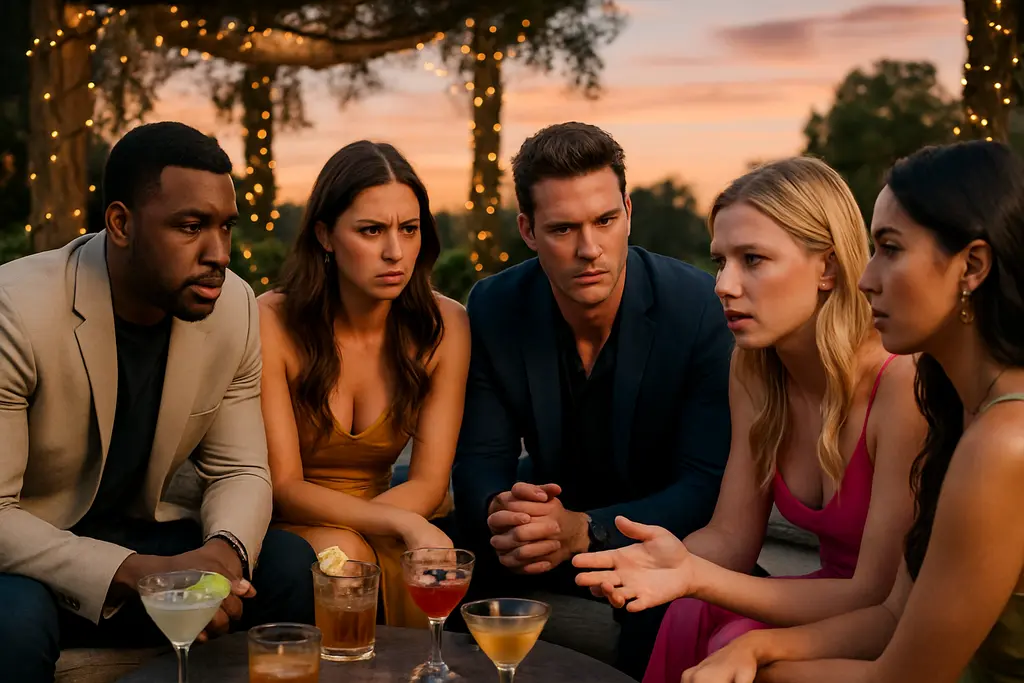


The Secret Lives of Mormon Wives: Orange County arrives at a moment when reality TV is again testing how much audience interest can be built from influencer culture, faith identity, and regional branding. Confirmed: Mormon Wives Orange County is scheduled to premiere on Thursday, November 12, 2026, with all 10 Season 1 episodes released that day on Hulu and Hulu via Disney+ through Hulu, according to Reality TV World.
Market-analysis: The spinoff’s appeal is not based only on whether viewers recognize every cast member before launch. It is built around a tested reality-TV tension: women with public-facing brands trying to define marriage, motherhood, faith, friendship, and visibility under the pressure of cameras and social platforms. The Orange County setting adds a recognizable reality-TV geography, while the connection to the Utah series gives Hulu a ready-made point of entry for viewers who followed the original show’s #MomTok framing.
Mormon Wives Orange County Release Strategy
Mormon Wives Orange County Premiere Plan
Confirmed: Hulu’s plan is a full-season drop, not a weekly rollout. That matters because the release model shapes how viewers talk about the show. A weekly reality series can stretch arguments, alliances, and social reaction across several weeks. A 10-episode release on one day invites binge viewing, faster social-media interpretation, and more immediate comparisons with the Utah original.
Market-analysis: For Mormon Wives Orange County, the all-at-once model may help Hulu capture curiosity quickly. Viewers can sample the premise, assess the cast chemistry, and decide whether the Orange County version has enough identity of its own. The risk is equally clear: if most conversation peaks during the first weekend after November 12, 2026, the platform will need cast interviews, clips, and post-release discussion to keep attention from fading.
Why A Full-Season Drop Changes The Conversation
Opinion: Reality TV often benefits from pause points. Weekly releases give audiences time to debate motives, social dynamics, and editing choices. A binge drop compresses that process. The result can be intense but brief discussion, especially for shows tied to influencer personalities who already operate in fast-moving online cycles.
Market-analysis: Mormon Wives Orange County appears designed for that compressed attention economy. Its title carries built-in recognition, its Orange County location invites comparison, and its cast includes personalities with existing public platforms. Hulu is not asking viewers to discover a fully unknown social world; it is asking them to test whether a known formula can travel.
Cast Continuity And The Orange County Frame
What The Reported Cast Signals
Confirmed from available research: The reported cast includes Aspyn Ovard, Ashleigh Pease, Avery Woods, Chandler Higginson, Madison Bontempo, McCall DaPron, Salomé Andrea, Jordan McClanahan, and Jen Affleck. The lineup points toward a series built around influencer visibility, friendship dynamics, motherhood, and public identity rather than a purely domestic portrait.
- Continuity point: Jen Affleck’s involvement connects the spinoff to the original Utah series.
- Family connection: McCall DaPron is identified in the research as the sister of Utah cast member Mayci Neeley.
- Regional shift: Orange County brings a reality-TV setting already associated with wealth, performance, and social hierarchy.
Market-analysis: Those connections are useful for Hulu because they lower the barrier for returning viewers. A spinoff often needs both familiarity and difference. Jen Affleck offers one bridge. The Orange County cast offers the test of whether the format can generate new conflicts and alliances without feeling like a repeat of Utah.
The Orange County Comparison
Reported audience trend: Early viewer interest has centered on how the spinoff may compare with The Real Housewives of Orange County. That comparison is understandable, but it can also be misleading. The Housewives brand is built around a long-running ensemble format, franchise expectations, and Bravo’s house style. Hulu’s series is tied more directly to social-media fame, faith identity, and the performance of motherhood online.
Opinion: The strongest version of the Orange County edition will not simply imitate existing Orange County reality television. It will need to clarify what makes this group distinct: not just location, not just lifestyle, but the collision between belief, branding, and public self-presentation.
Faith, Influencer Culture, And Audience Trust
Why The Original Series Set The Terms
Confirmed cultural context: The Utah series became part of a wider pop-culture conversation around #MomTok, LDS culture, gender expectations, social-media fame, and the commercial framing of domestic identity. The Washington Post connected the original show to a broader moment in which Mormon wives and related influencer imagery were receiving unusual mainstream attention.
Market-analysis: That context gives the spinoff both opportunity and responsibility. The phrase “Mormon wives” carries religious, cultural, and media meanings at once. Viewers may arrive for interpersonal drama, but the show’s framing touches on belief, belonging, and how women package private life for public consumption.
Authenticity Is A Framing Question
Reported audience concern: Some discussion has focused on how precisely the title maps onto cast members’ religious practice and marital status. That issue should be treated carefully. Without platform-supplied clarification for every individual, it is more responsible to read the concern as a question about marketing and framing, not as a judgment about any cast member’s private faith.
Opinion: Audience trust will depend on whether the show treats religion as more than decoration. If belief is presented only as a hook, viewers may question the title’s relevance. If the series shows how identity, community, family expectation, and online income intersect, the premise has a stronger chance to feel culturally specific rather than merely provocative.
How Hulu Benefits From The Spinoff

Distribution And Monetization Signals
Market-analysis: Hulu’s interest in the spinoff fits a broader streaming pattern: unscripted series can extend a recognizable format at a lower public-risk threshold than many scripted franchises. The full-season release gives the service a compact event date, while the influencer-centered premise gives the show potential life outside the app through interviews, short clips, and audience debate.
Market-analysis: The Hulu via Disney+ availability also matters because it places the series inside a wider streaming bundle environment. The research does not provide subscriber targets or budget information, so any claim about expected performance would be speculative. What can be said is narrower: Hulu is using a known unscripted title to test whether the original show’s cultural conversation can support a regional spinoff.
Cautious Anticipation, Not Certainty
Opinion: Anticipation should not be mistaken for guaranteed success. A spinoff can inherit curiosity, but it still has to earn sustained attention through cast dynamics, clear stakes, and a point of view. For readers interested in how media brands, audience taste, and awards-adjacent screen culture intersect, check out Biff Award for insights within the same network.
Market-analysis: The show’s clearest advantage is recognizability. Its clearest challenge is differentiation. If the Orange County edition depends too heavily on borrowed interest from the Utah series, it may feel secondary. If it uses the setting to examine a different version of faith-adjacent influencer culture, it can justify the expansion.
What Mormon Wives Orange County Means For Hulu
Opinion: The most revealing question is not whether the spinoff will generate launch-week noise. It probably will, given the title, the cast connections, and the Orange County setting. The better question is whether the series can make its cultural frame feel specific after the first wave of comparison has passed.
Market-analysis: Mormon Wives Orange County gives Hulu a reality-TV property with built-in debate around format, faith, influencer identity, and regional performance. That combination is valuable, but it also invites scrutiny. Viewers are likely to ask whether the show is observing a community, amplifying a brand, or doing both at once.
Opinion: If the series treats its cast as people shaped by belief, ambition, family pressure, and public economics, it could add a meaningful new chapter to Hulu’s unscripted slate. If it leans only on title recognition, it may burn fast and fade. The audience anticipation is real, but the cultural test begins on November 12, 2026, when the full season is available and viewers can judge whether this spinoff has a voice beyond its headline-ready premise.