


Lioness Season 3 gives Paramount+ exactly the kind of summer streaming weapon it needs: a Taylor Sheridan franchise with explosions, CIA pressure, family cost, geopolitical paranoia, and a cast strong enough to sell the show as both action spectacle and prestige drama. The new season premiered August 2, 2026, on Paramount+, returning Zoe Saldaña as Joe, Nicole Kidman as Kaitlyn Meade, Morgan Freeman as Secretary of State Edwin Mullins, and Michael Kelly as Byron Westfield.
That combination is the point. Lioness is not only being marketed as another spy thriller. It is being used as a star-driven franchise pillar inside Paramount+’s larger Sheridan ecosystem. The streamer’s official Lioness Season 3 guide frames the new season around Joe’s most personal assignment yet, with hidden networks, foreign operatives, and personal betrayals colliding. That language tells viewers what Paramount+ wants from the show now: not just missions, but emotional damage attached to recognizable stars.
Why Season 3 Is A Bigger Paramount+ Play Than Another Spy Story
Paramount+ has invested heavily in Taylor Sheridan because his shows give the platform a recognizable identity. Yellowstone, Mayor of Kingstown, Tulsa King, Landman, and Lioness all operate in different genres, but they share a similar promise: hard-edged worlds, morally bruised professionals, powerful institutions, family pressure, and characters who treat loyalty as both weapon and wound.
Lioness is the espionage arm of that strategy. It lets Paramount+ sell Sheridan’s brand to viewers who want military operations, intelligence politics, and action-driven drama rather than ranch succession or organized-crime tension. Season 3 strengthens that lane by moving the show deeper into personal stakes while keeping the national-security frame.
Paramount Press Express said the Season 3 trailer raised the stakes for the show’s “most dangerous mission yet,” with the season premiering August 2 and starring Saldaña, Michael Kelly, Morgan Freeman, and Nicole Kidman through the official Lioness Season 3 trailer release. That cast order matters because it shows how the series is being sold: action first, prestige names attached, Sheridan at the center.
The show is not trying to be subtle summer counterprogramming. It is designed to look expensive, dangerous, and easy to identify in a crowded streaming menu.
How Zoe Saldaña Makes The Franchise Work
Zoe Saldaña is the reason Lioness can survive its own scale. Joe could easily become a generic exhausted field commander: hard stare, family guilt, mission briefing, violent extraction. Saldaña gives the character sharper tension because she plays Joe as someone who knows exactly how much the job is taking from her and keeps doing it anyway.
That is what makes Season 3’s “most personal assignment” framing useful. The show has always placed Joe between operational command and family collapse. She is not only managing assets, missions, and Washington pressure. She is managing the long-term damage of being good at a job that punishes every emotional attachment.
People’s Season 3 release schedule coverage described the new season as centering Joe McNamara’s most personal mission yet, with the Paramount+ premiere arriving August 2 through its Lioness Season 3 episode guide. That kind of framing is not incidental. It gives the show a reason to keep returning to Joe’s private life even when the action gets louder.
A spy franchise needs tradecraft. A streaming franchise needs a person viewers can follow through repeated emotional exhaustion. Saldaña gives Paramount+ that center.
Why Nicole Kidman And Morgan Freeman Change The Show’s Weight
Nicole Kidman and Morgan Freeman are not decorative names on the poster. They change the show’s weight because they pull Lioness toward institutional drama. Kidman’s Kaitlyn Meade and Freeman’s Edwin Mullins make the series feel like a show about policy, authority, and national-security compromise, not only field operations.
That is important for Paramount+. A straight action series can burn bright and disappear. A star-driven political spy drama has more room to grow. Kidman brings calculation, restraint, and executive pressure. Freeman brings gravitas and a sense of state-level consequence. Their scenes help the show widen beyond Joe’s team while still feeding the same mission machine.
Entertainment Weekly reported that Freeman praised Sheridan’s writing around Season 3, while noting that Freeman plays Secretary of State Edwin Mullins and that the show had just returned for its third season through its Morgan Freeman Lioness interview coverage. That kind of interview coverage helps Paramount+ sell the season as more than military action. It becomes a prestige conversation around actors, writing, and contemporary anxiety.
The challenge is using those stars without turning them into symbolic authority figures. Season 3 works best when Kidman and Freeman are not only lending importance to the show, but actively shaping the cost of Joe’s decisions.
How Taylor Sheridan Turns Spy TV Into A Brand Extension
Taylor Sheridan’s strongest streaming advantage is brand recognition. Viewers may not know every plot detail before they click, but they know the kind of world they are entering. Sheridan shows often promise men and women under pressure, systems that are already compromised, violence with personal cost, and dialogue that turns institutions into battlegrounds.
Lioness takes that identity into the intelligence world. It is not a procedural built around neat weekly cases. It is a pressure series. Every mission seems to create another moral fracture. Every chain of command has hidden motives. Every personal relationship is made worse by professional secrecy.
That makes Lioness particularly useful for Paramount+ in summer. The platform can market it as a high-intensity weekly drama while tying it to Sheridan’s larger collection. Paramount+ has even promoted the broader Taylor Sheridan library alongside Lioness, grouping the series with titles such as The Madison, Mayor of Kingstown, Tulsa King, and Landman in its Season 3 materials.
TrueRealTV has covered how streaming platforms increasingly use recognizable creative brands to keep audiences inside one service, especially in our analysis of streaming TV’s franchise strategy. Lioness fits that pattern because the selling point is not only the story. It is the ecosystem around the storyteller.
Why The Summer Release Window Helps Paramount+
The August 2 premiere gives Lioness a strong seasonal advantage. Summer streaming does not need to be quiet. In fact, it can be one of the best windows for action drama because audiences are often between network-TV cycles and looking for event-like streaming titles that feel bigger than background viewing.
Paramount+ placed Lioness alongside other August 2026 programming highlights, including The Challenge Season 42 and other new titles through its Paramount+ August lineup. The placement shows how the platform wants the month to feel: active, genre-heavy, and anchored by recognizable originals.
The weekly release pattern also helps. A full-season drop can burn through attention in one weekend. A weekly rollout lets Paramount+ stretch the conversation, promote cast interviews, push episode discussion, and keep Sheridan fans returning. That is useful for a platform that needs appointment behavior, not only passive catalog browsing.
Lioness is built for that rhythm. Each episode can deliver action, briefing-room tension, family strain, and cliffhanger movement. The show’s structure gives Paramount+ a reason to keep marketing every week.
Why Star Power Still Matters In Streaming Drama
Streaming once tried to convince viewers that algorithmic discovery could replace old-fashioned star power. Lioness argues the opposite. The cast is one of the show’s biggest weapons.
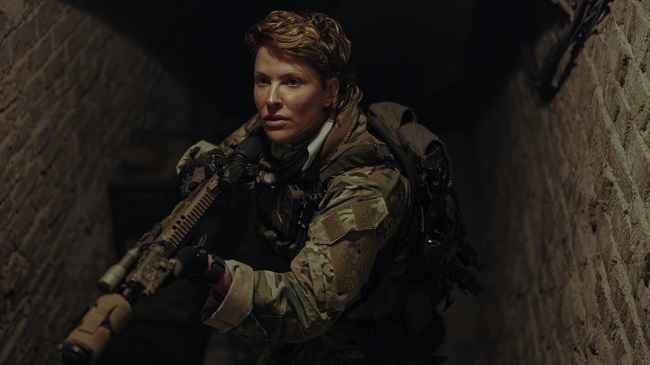
Zoe Saldaña brings franchise-film authority and emotional intensity. Nicole Kidman brings prestige-TV credibility. Morgan Freeman brings instant recognition and institutional weight. Michael Kelly brings political-thriller sharpness. Laysla De Oliveira, Jill Wagner, Dave Annable, Genesis Rodriguez, and the wider ensemble help connect the top-line names to the operational world.
| Star Element | What It Adds To Lioness | Why Paramount+ Needs It |
|---|---|---|
| Zoe Saldaña | Emotional and tactical center | Makes Joe more than an action lead |
| Nicole Kidman | Executive pressure and prestige value | Pulls the show toward political drama |
| Morgan Freeman | State-level authority | Raises the stakes beyond the field team |
| Michael Kelly | Intelligence-world tension | Links Washington pressure to mission execution |
| Taylor Sheridan | Brand identity | Connects the show to Paramount+’s larger franchise strategy |
That mix makes Lioness more marketable than a generic spy series. The viewer does not have to be sold only on plot. They can be sold on faces, tone, and trust in a creative brand.
How The Show Balances Action And Personal Cost
The danger for Lioness is excess. Sheridan’s shows often work best when scale is balanced by intimacy. Too much action can make the missions feel detached from character. Too much personal drama can slow the espionage engine. Season 3’s “personal assignment” language suggests Paramount+ understands that the show’s future depends on the collision between the two.
Joe’s family life remains essential because it gives the action a price. If she were only a super-competent commander, Lioness would risk becoming a tactical fantasy. The family strain makes her competence feel corrosive. Every success at work damages something at home. Every personal vulnerability can become operational risk.
That is where the show separates itself from a simple military thriller. It is not only about whether the mission succeeds. It is about what kind of person survives repeated success in that world.
This is why the series can hold both action fans and drama viewers. The explosions bring viewers in. The cost gives them a reason to care.
Why The Real-Life Team Lioness Inspiration Still Matters
Lioness draws from the idea of Team Lioness, the real-life all-female military units used in Iraq to search and engage with women in environments where male soldiers could not operate as effectively. The show fictionalizes heavily, but that inspiration matters because it gives the series a gendered operational premise rather than simply putting women into a standard spy-show template.
Jill Wagner, who stars in and executive produces the series, has discussed the show’s subject matter and its respect for military contexts in interviews around Season 3. Decider’s interview with Wagner noted that the original idea was inspired by a real all-female military unit and that Wagner and her husband, Major David Lemanowicz, helped develop the concept before Sheridan became central to the series through the Jill Wagner Lioness interview.
That background gives the show a useful tension. Lioness is entertainment, not documentary. It uses heightened action and dramatic invention. Yet the all-female operational premise gives it a more specific identity than many spy dramas built around interchangeable covert teams.
Season 3 needs to protect that identity. If the show becomes only another explosion-heavy Sheridan vehicle, it risks losing what made it distinct.
Why Paramount+ Needs Lioness To Feel Like An Event
Paramount+ is in a difficult streaming market where subscriber attention is fragmented and platforms need titles that feel worth returning for. Lioness helps because it checks several boxes at once: known creator, prestige cast, action genre, weekly urgency, and connection to a broader platform brand.
That is why calling the season a “summer streaming weapon” is not just a metaphor. The show gives Paramount+ a way to compete during a crowded release period without needing a superhero universe or a massive fantasy franchise. It uses stars, tension, and Sheridan’s audience loyalty instead.
The key is momentum. A spy drama can generate strong first-week curiosity, but a franchise needs sustained conversation. Paramount+ has to make viewers feel that each episode matters, that Joe’s personal assignment is changing the larger board, and that the season is building toward a payoff worthy of the cast.
If the show delivers that, Lioness becomes more than another Sheridan title. It becomes a Paramount+ anchor.
What Season 3 Says About Sheridan’s Streaming Power
Taylor Sheridan’s streaming power comes from consistency. Viewers know his shows will not be gentle. They know the institutions will be compromised, the men and women will be wounded, and the dialogue will carry moral bluntness. That predictability is not a weakness for Paramount+. It is a brand asset.
Lioness Season 3 shows how far that brand can stretch. Western family empire, oil-field drama, prison-town politics, mob displacement, and CIA operations are different genres, but Sheridan’s world view links them. He is interested in people who operate inside systems that demand violence, secrecy, and sacrifice, then punish them for surviving.
That makes Lioness one of the cleaner tests of his Paramount+ value. It is not tied to the Yellowstone ranch mythology. It stands on action, espionage, and stars. If Season 3 keeps audiences engaged, it proves Sheridan’s brand can remain useful even when moved far from the genre that made him a streaming power center.
Paramount+ needs that proof. A platform cannot depend forever on one flagship world. It needs creative brands that can travel.
Why Lioness Season 3 Could Define Paramount+’s Summer Identity
Lioness Season 3 arrives with a simple assignment of its own: keep Paramount+ feeling dangerous, star-driven, and current during the summer streaming season. The show has the elements to do it. Saldaña gives it a bruised emotional center. Kidman and Freeman give it institutional scale. Kelly gives it political edge. Sheridan gives it brand identity. Paramount+ gives it a weekly release window designed for sustained attention.
The result is a spy franchise that does not need to reinvent the genre to matter. It needs to sharpen what already works: personal cost, mission pressure, star power, and the feeling that the world behind the briefing room is unstable.
That is why Season 3 matters for Paramount+. Lioness is not only another action drama in the catalog. It is a test of whether the streamer can turn Taylor Sheridan’s espionage lane into a reliable summer event franchise. The mission may belong to Joe on screen, but the bigger mission belongs to Paramount+: keep viewers coming back, week after week, for a show that makes spy drama feel like one of the platform’s defining weapons.