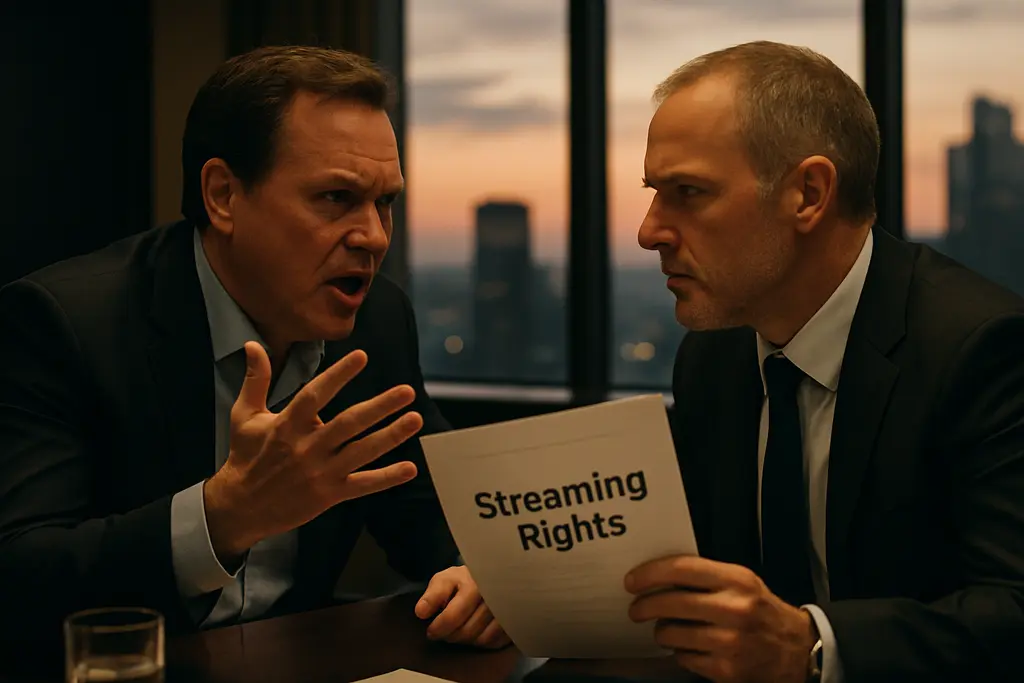


Confirmed: Nielsen methodology is scheduled for another major adjustment on August 31, 2026, and the advertising market is already reading the change as more than a technical update. Nielsen says the enhancements affect its Big Data + Panel system through passive and wearable-based co-viewing, adjusted universe estimates, upgraded household demographic assignment, improved weighting, better Spanish-dominant Hispanic representation, refined ACR tuning, and grouping changes for one ACR Big Data provider through its measurement update. For streaming advertisers, the point is not only whether a number moves. The point is whether the new number changes how buyers value platforms, genres, ad tiers, and live events.
Market-analysis: The timing matters because streaming ad strategy has become increasingly dependent on cross-platform comparability. Since September 2025, Nielsen’s Big Data + Panel system has served as the industry currency across broadcast, cable, and streaming data, according to the research record. That means the August 31, 2026, enhancements are not landing in a side channel. They are set to affect the common measurement language used by sellers, agencies, content owners, and marketers as they argue over reach, frequency, audience quality, and price.
What Nielsen methodology Is Set To Change
Measurement Changes With Pricing Consequences
Confirmed: The August 31, 2026, changes are scheduled to refine how Nielsen assigns viewers, estimates the TV universe, weights big data with panel data, and accounts for co-viewing. The research record says the update includes ARF DASH-based universe estimate changes and timing-lag corrections. It also indicates that the revised approach is expected to lower reported streaming viewership share while raising broadcast and cable shares. That expected movement is central to ad strategy because the same audience behavior can be valued differently if the measurement frame changes.
Market-analysis: The practical effect of Nielsen methodology changes may be felt first in negotiations. If a streaming platform’s reported share declines under revised universe estimates, buyers may press for better pricing, stronger guarantees, or clearer proof that an audience remains valuable even if the headline share is lower. Sellers, in turn, may argue that revised measurement does not erase brand safety, targeting tools, viewer attention, or the commercial value of younger audiences. This is where measurement becomes a cultural and economic issue: the industry is not only counting viewers, it is deciding which viewing habits deserve premium treatment.
Nielsen methodology And Co-Viewing Signals
Confirmed: The research notes indicate that pilot tests using passive or wearable-based co-viewing produced an average viewership increase of about 4.19% for marquee events such as the Super Bowl, NBA All-Star programming, and Olympic opening or closing ceremonies. The same notes caution that regular programming will likely see smaller boosts. That distinction is useful for advertisers because co-viewing is not evenly distributed across all television. Big live events, shared household viewing, and broad-audience sports may benefit more than niche, single-viewer streaming titles.
Market-analysis: This can push advertisers toward a more layered streaming plan. A campaign built only around individual targeting may miss the cultural value of shared viewing, while a campaign built only around mass reach may miss the precision that made streaming attractive in the first place. The updated co-viewing approach may give event-based inventory a stronger sales story, especially for properties that bring families, friend groups, or mixed-age households to the same screen.
Why Ad-Supported Streaming Still Has Pull
Younger Viewers Remain A Core Argument
Confirmed: The research record says ad-supported streaming captured 46.6% of ad-supported TV viewing in the first quarter of 2026. It also says ad-supported TV across linear and streaming made up nearly 73% of all TV viewing in that quarter. Among viewers aged 18 to 49, streaming accounted for 66.7% of time spent with ad-supported TV. Within streaming, 81.1% of that time was on ad-supported tiers, with the remaining share on FAST platforms.
Market-analysis: Those figures explain why a possible decline in reported streaming share does not automatically weaken the streaming ad case. If younger viewers are still spending most of their ad-supported TV time with streaming, agencies cannot treat the August 31, 2026, update as a reason to retreat fully into linear buying. A more likely response is recalibration: buyers may compare premium ad tiers, FAST channels, live sports, and entertainment libraries with more caution, while still treating streaming as a major path to younger audiences.
Opinion: The most defensible strategy is not to frame streaming and linear as enemies. Viewers do not experience media in those trade categories. They move between a live game, a reality competition, a drama episode, a free channel, and a subscription app based on habit, price, mood, and household context. For culture-focused advertising, the better question is whether a placement reaches people at a moment when the program feels socially relevant, not only whether it sits inside a platform category with a rising or falling share.
How Buyers May Adjust Campaign Planning
From Platform Share To Audience Proof
Market-analysis: Advertisers are expected to prepare for shifts in ad pricing, reach calculations, and inventory value, though the research record does not include exact dollar figures. That uncertainty matters. A buyer may not know yet whether a specific streaming campaign will cost less, whether a linear package will look stronger, or whether a sports-heavy plan will gain value from improved co-viewing measurement. Still, the direction of travel is clear enough: campaign planning will likely place greater pressure on sellers to explain who is being counted, how they are being assigned demographically, and how co-viewers are represented.
Confirmed: Nielsen is also improving demographic modeling through its Household Demographic Assignment Model, according to the research record, with a stated goal of reducing under-counting in households with younger members. The same record says Spanish-dominant Hispanic universe estimates are being enhanced through U.S. Census ACS data and the National Hispanic Enumeration Survey. These details matter for entertainment advertisers because streaming audiences are not culturally uniform. A platform that performs well with younger households or Spanish-dominant Hispanic viewers may see its value discussed with more precision after the update.
Market-analysis: That could affect how studios, streamers, and media agencies package campaigns around film releases, reality franchises, sports shoulder programming, and ad-supported series. For more on how these changes might impact online video consumption and media buying dynamics, Internet Video Magazine provides an insightful perspective within the same media network.
Sports Concerns Show The Stakes

The NFL Reaction Is A Warning Sign
Confirmed: The NFL publicly expressed concern about Nielsen’s August 31, 2026, changes, calling them rushed and warning that they could hurt reported sports viewership numbers, according to The Washington Post. The research record says the league averaged 18.7 million viewers per game in the 2025 regular season under Big Data + Panel, a 10% increase over 2024, and is watching for potential declines after the scheduled August 31 update.
Market-analysis: The NFL’s concern is not only a sports story. It signals how much premium entertainment inventory depends on trusted measurement. Live sports, awards programming, competition finals, and other shared cultural events often sell themselves as appointment viewing. If revised methodology changes the reported scale of that viewing, sellers may need to defend pricing with stronger context: co-viewing, audience composition, attention, social spillover, and cross-platform reach.
Opinion: This is where streaming advertising strategies become audience-aware rather than platform-fixated. A sports telecast, a reality finale, and a high-profile streaming premiere may all attract different kinds of communal attention. Measurement can help compare them, but it cannot fully explain why some programs become shared cultural reference points. Advertisers still need judgment about tone, audience fit, and whether the program environment supports the message.
Nielsen methodology And Streaming Advertising Strategies
Market-analysis: The strongest reading of Nielsen methodology changes is that they may make streaming advertising less dependent on broad category hype and more dependent on evidence. If reported streaming share falls after August 31, 2026, platforms will need to explain why their inventory still commands premium budgets. If co-viewing lifts certain live or high-profile events, advertisers may place more weight on shared-screen moments. If demographic assignment improves, campaigns may be judged more closely on whether they reach younger, Spanish-dominant Hispanic, or mixed-household audiences with credible measurement support.
Confirmed: The research record does not yet provide exact post-change pricing shifts, budget reallocations, or final viewership impacts. That limits what can be said with confidence before the August 31, 2026, implementation date. What is supported is narrower but still significant: Nielsen is changing how key viewing inputs are measured; streaming share is expected to decline under the revised approach; event co-viewing may gain clearer recognition; and major stakeholders are already preparing for strategic fallout.
Opinion: For advertisers tied to film, television, reality TV, and streaming culture, the smartest response is cautious adaptation. Treat the new numbers as a reset in the shared language of TV buying, not as proof that audience behavior changed overnight. The viewers were already moving across platforms. The industry is now changing how it counts them, prices them, and tells stories about their value.